
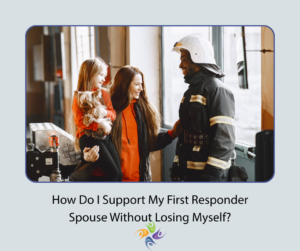
 Loving a first responder often means loving someone who lives in regular contact with things most people never have to see. You may have expected the schedule strain, the fatigue, the unpredictability. What you may not have expected is how much of that job would end up shaping your evenings, your conversations, your closeness, and the emotional climate of your home.
If you have been trying to hold things together while quietly feeling lonely, overextended, or unsure how long you can keep doing this the same way, that does not mean you are unsupportive. It means you are paying attention. At The Relationship Therapy Center, we work with couples in Roseville, Fair Oaks, and the greater Sacramento area through both couples therapy and marriage counseling and trauma therapy, and this is one of the clearest truths we see: both people matter, and the relationship needs care too.
What Does Supporting a First Responder Spouse Actually Cost?
Supporting a first responder partner can involve far more than patience and understanding. It often includes invisible emotional labor, chronic adaptation, loneliness, and the slow build of depletion. Naming that cost is not a betrayal of your spouse. It is an honest acknowledgment of what the relationship has been carrying.
There is a version of this conversation that many partners never feel allowed to have.
It is the version where you say what the job has required of you, not just what it has required of your spouse. It is the version where you admit that loving someone in a high-exposure profession can mean compensating constantly: reading the room, carrying more at home, protecting the children from tension, deciding when not to bring something up, and holding the emotional center of the household when your partner cannot.
Many partners describe a very specific ache: being with someone they love, yet feeling as though they are doing life beside them rather than with them.
The person is home, but not quite reachable. The conversation is happening, but something essential is missing. That is not a trivial complaint. It is a relational wound.
Some partners also begin developing symptoms of their own. They feel keyed up, emotionally exhausted, numb, or perpetually braced for the next hard day, the next bad mood, the next withdrawal, the next sign that the house is no longer feeling like a calm place to land. This is part of what people mean when they talk about first responder spouse burnout. It is not selfishness. It is wear and tear.
And when partners try to name that wear and tear, they may end up feeling blamed for bringing it up. The issue becomes their tone, timing, expectations, or sensitivity rather than the pattern they were trying to describe. That is a painful dynamic, and it can make someone start doubting their own reality. If that has been happening, it is worth naming clearly: noticing what the relationship is costing you does not make you disloyal. It makes you honest.
What Does Sustainable Support Actually Look Like?
Sustainable support is not endless accommodation. It is a way of caring that protects both the partner and the relationship from collapse. It includes honesty, boundaries, outside support, and a clear understanding that love does not require you to be your spouse’s only place to fall apart.
A lot of partners quietly slide into a model of support that is not really support at all. It is endurance.
They carry more because it feels easier than asking. They stay quiet because they do not want to add to the burden. They become more capable, more flexible, more emotionally self-sufficient, and less visible in the process. That may keep the peace for a while, but it usually does not protect the marriage in the long term.
Support that lasts has to include truth.
That means being able to say, in some form, “This has been hard on me too,” without turning the conversation into a verdict on your spouse’s character. It means describing the impact of the pattern instead of swallowing it and hoping it will fix itself. This is one of the places where therapy can be so helpful. Not because you need help complaining better, but because you need a place where reality can be spoken without either person becoming the villain.
Boundaries matter too. Not cold, punitive boundaries. Clear ones. Limits that protect your own functioning and keep the relationship from becoming organized around one person’s stress response. You are allowed to say what you can carry and what you cannot. You are allowed to need restoration, help, rest, and emotional reciprocity.
Your support system matters just as much. If your marriage is strained and your spouse is depleted, you cannot rely on that same relationship to be your only source of grounding. Friends, family, therapy, community, faith support, or trusted peers can all matter here. That is not disloyal. It is wise.
And perhaps most important: you do not have to become the sole container for what your spouse has been through. You can be loving without becoming their therapist. In fact, that distinction often protects the marriage.
Why Do First Responders Sometimes Push Help Away — and What Does That Mean for You?
Resistance to help is common in high-exposure professions, and it often comes from the same strengths that make someone effective on the job. Understanding that can help partners respond with more clarity. It does not mean accepting endless resistance or carrying the consequences alone.
This part can be deeply frustrating.
You can see that something is not working. You can feel the cost at home. You may even sense that professional support would help. And still, the person you love resists it, minimizes it, or insists they are fine.
That resistance often has roots in the job itself. First responders, military members, healthcare workers, and others in high-intensity roles are trained to keep moving under pressure. They get through the call. They do what needs doing. They compartmentalize fast. Those skills are adaptive in the field. They can also make slowing down for therapy feel unnatural, weak, threatening, or simply impossible.
There is also the reality that many first responders do not fully see what their partner sees.
A coping style that feels normal from the inside can look starkly different from across the room. Drinking to shut off. Staying emotionally flat. Avoiding difficult conversations. Living in task mode. Pulling away from intimacy. These patterns often become visible to the spouse before they become visible to the person using them.
That is why how you bring it up matters. Turning trauma language into a weapon almost always backfires. People do not open up when they feel diagnosed in the middle of a fight. But respectful honesty still matters. Sometimes the path is not pressure. Sometimes it is consistency, clarity, and getting support for yourself, while the other person develops readiness over time.
Your influence matters. Your love matters. Your limits matter too.
When Is It Time to Get Support for Yourself — or for Both of You?
It is time to get help when the current arrangement keeps draining the relationship and no real change is happening. Support may begin individually, together, or eventually both. The key is not waiting for an absolute crisis before taking the strain seriously.
You do not need a dramatic breaking point to justify support.
If the same issues keep repeating, if you feel increasingly alone inside the marriage, if conversations turn tense quickly or never really resolve, if you are carrying more than feels sustainable, those are enough reasons to reach out. Many first responder marriage problems become chronic simply because people normalize them for too long.
Sometimes the first step is individual therapy for the partner. That can be a place to sort through your experience, reclaim perspective, build language for hard conversations, and decide what healthy support actually looks like for you. Beginning there is not a rejection of your spouse. It is often the most grounded option available.
When both people are willing, couples work can be incredibly valuable because it gives the relationship itself a place to exist in the room. The focus becomes not just one person’s stress, but the pattern between you. That matters.
It is also why the related posts What Does PTSD Look Like in a Marriage? and Can Trauma Therapy and Couples Counseling Happen at the Same Time? can be helpful next reads if you are trying to understand the bigger picture of being married to a first responder with PTSD.
Frequently Asked Questions
These are some of the questions partners often hold back from asking because they worry the answers will make them sound selfish. They do not. These questions are part of trying to love well without disappearing in the process.
Am I allowed to have needs in this relationship even though my spouse has been through a lot?
Yes. Your needs do not become less valid because your partner’s work is heavy. A healthy relationship makes room for both people.
What if my first responder spouse says therapy is for people who cannot handle things?
That belief is common. It can help to frame therapy as support, not weakness — a resource for the parts of life the job was never designed to hold alone.
Is couples therapy useful if my spouse does not want to talk about work trauma?
Yes. Couples therapy can focus on the relationship patterns without requiring full disclosure about what happened on the job.
You Both Deserve Support — and the Relationship Does Too
Real support does not mean one person carrying the whole emotional weight of the marriage. It means recognizing that both partners have been affected, that both need care, and that the relationship cannot keep running on endurance alone. Sustainable change becomes possible when all three are taken seriously.
If this post felt close to home, take that seriously.
You are not asking for too much by wanting a marriage that feels more mutual, more connected, and less defined by management. You are not failing your spouse by admitting that this has been hard on you. You are not disloyal for wanting support that includes your well-being, too.
At The Relationship Therapy Center, we work with first responders, their partners, and their relationships across Roseville, Fair Oaks, and the Sacramento area. We understand that “how do I support my first responder spouse?” is not really a question about being nicer, quieter, or more endlessly patient. It is a question about how to love someone carrying a lot without losing the relationship — or yourself — in the process.
That is a worthy question. And it deserves real help.
Begin Trauma Therapy in the Sacramento Area or Online:
Are you ready to find peace and healing after trauma? We are here to support you and provide high-quality evidence-based trauma treatment to people in the Sacramento Area and online for people living in the state of California. To begin trauma therapy in Fair Oaks, CA or Roseville, CA, please follow these steps:
- Reach out to our relationship therapy clinic for a free 15-minute phone consultation to learn more about trauma therapy.
- Meet with one of our compassionate trauma therapists.
- Begin trauma treatment and regain control in your life.
Other Services Offered at The Relationship Therapy Center in California:
In addition to trauma therapy, Our Sacramento area counseling clinics located in Roseville and Fair Oaks, CA are pleased to offer a variety of mental health services. Our couples services include: Counseling after infidelity, sex therapy, co-parent counseling, family therapy, divorce counseling, intensive couples retreats, and premarital counseling. Individual therapy services include, therapy for children, teen therapy, depression treatment, and individual relationship counseling. Our therapists offer online counseling in California to treat a variety of mental health concerns. Please reach out to our Sacramento area therapy office to learn more about the many ways we can help you or your loved ones heal and grow.
Certified Gottman Therapist
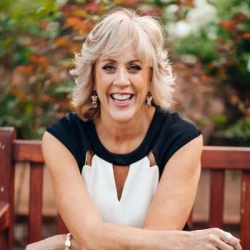
Nancy Ryan, LMFT & Certified Gottman Therapist, is the Founder and Clinical Director of Relationship Therapy Center, with 15+ years of experience supporting clients in Sacramento, Placer, and El Dorado Counties, and with offices in Roseville, CA, and Fair Oaks, CA. Our team also supports clients throughout California, Idaho, and Washington
She specializes in couples counseling, mentoring, and training her therapists on how to be excellent therapists. Nancy is also featured in a variety of media and provides couples therapy weekend workshops and retreats.
Relationship Therapy Center uses evidence-based approaches such as EMDR for trauma, Cognitive Behavioral Therapy (CBT), Acceptance and Commitment Therapy (ACT), Dialectical Behavior Therapy (DBT), Mindfulness, and Motivational Interviewing to treat individuals. Family therapy focuses on family systems and Play Therapy for children. Evidence-based couples therapy includes using the Gottman Method, Gottman Method Affair recovery/infidelity counseling, Emotionally Focused Therapy (EFT), Attachment therapy, and David Schnarch's Crucible Therapy, including differentiation. The whole team is in weekly training on trauma-informed care, somatic techniques, sex therapy, and different topics each year.
- Therapist for Childhood Emotional Neglect - October 8, 2026
- How do I Know if I Have Postpartum Depression? - October 1, 2026
- Is It a Midlife Crisis? - September 24, 2026