
How Does Trauma Affect Relationships?
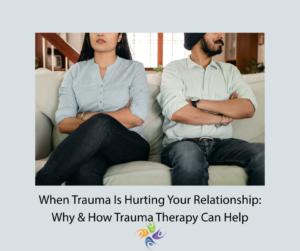 You can love each other and still feel like something keeps going wrong.
Maybe you have had the same painful argument so many times that now even the beginning of it feels familiar. Maybe it is not an explosive conflict at all. Maybe it is the distance. The missed bids. The way one of you reaches, and the other seems to disappear. Maybe you have already tried couples therapy and marriage counseling and learned useful things, yet the deeper shift still has not happened. You know the cycle. You can name the pattern. But when it matters most, you end up right back inside it.
At The Relationship Therapy Center, we have worked with individuals and couples across Roseville, Fair Oaks, and the greater Sacramento area long enough to recognize a pattern that many people miss at first: sometimes what looks like a relationship issue is being powered by something older and deeper. The conflict is real. The disconnection is real. But underneath it, one or both people may be carrying unresolved trauma that keeps hijacking the relationship from the inside.
That is why this conversation matters. If trauma is part of the picture, then better communication alone may not be enough. Sometimes the relationship does not need more effort. Sometimes it needs the right lens. And sometimes that means combining relationship work with trauma therapy.
How Does Trauma Affect Relationships?
Trauma changes how people experience closeness, conflict, trust, vulnerability, and repair. It can make a loving relationship feel strangely unsafe, not because the partner is dangerous, but because the nervous system is still organized around protection. What shows up as distance, defensiveness, reactivity, or mistrust often has roots much older than the relationship itself.
Trauma does not stay politely tucked away in one corner of a person’s life. It travels. It changes how someone reads a room, interprets tone, responds to disappointment, tolerates dependence, and manages emotional closeness. And because intimate relationships ask the most of us, they are often where trauma becomes hardest to ignore.
A partner’s silence can feel loaded. A change in tone can land like rejection. A normal disagreement can register in the body as danger. For someone carrying unresolved trauma, the nervous system may still be scanning for threat even at home. The problem is not always what is happening now.
The problem is that the body has learned certain cues mean, Brace yourself.
This can create patterns that look relational but are actually protective. One partner may hold back emotionally because openness has never felt safe. Another may react hard and fast because their system is built to mobilize, not pause. Someone else may look distant, secretive, irritable, or hard to reach, not because they do not care, but because self-protection has become automatic.
Many people living this way do not think of themselves as trauma survivors. They may point to a demanding career, a chronically critical parent, betrayal in a past relationship, years of emotional neglect, a devastating loss, or a season of constant pressure and say, “It was hard, but it was not trauma.” Still, the body often tells the truth long after the mind has minimized the story.
If that question is still forming for you, What Is Trauma — and Could It Be Affecting You? is an important companion piece.
Why Do I Get So Triggered by Small Things My Partner Does?
Triggers in a relationship are rarely about the present moment alone. A small cue can wake up a much older response. That is why a look, a phrase, a pause, or a shift in energy can feel far bigger than it seems “supposed” to feel. The reaction is real, even when the current situation is not dangerous.
This is one of the most demoralizing parts of trauma inside a relationship: you know the reaction feels too big, and yet you cannot stop having it.
Your partner sighs. They look annoyed. They forget to text back. They go quiet in the middle of a hard conversation. On the surface, none of those things explains the wave that hits next. But your nervous system is not calculating proportion. It is pattern-matching. It is reading the present through the lens of what came before.
That is what triggers do. They collapse time.
A person is no longer only responding to the partner in front of them. They are also reacting to a history of being ignored, betrayed, criticized, controlled, abandoned, or emotionally left alone. The body answers first. Logic shows up later, often after damage is already done.
Once one partner floods, the other often follows. The first person becomes overwhelmed, sharp, tearful, frantic, shut down, or impossible to reach. The second person responds to that activation with their own. What began as something small now feels enormous. Both people end the conversation feeling blamed, bewildered, or emotionally bruised.
The partner on the receiving end usually experiences this very differently. They do not feel the old threat. They feel the current reaction. Over time, they may start editing themselves, tiptoeing around topics, and organizing the relationship around avoiding explosions or shutdowns. That is exhausting. It is also one reason trauma needs treatment at the level where it lives: in the nervous system, not just in the conversation.
Why Does Couples Therapy Sometimes Stop Working — and Could Trauma Be the Reason?
Couples therapy can stall when the visible pattern is being treated, but the hidden driver is not. Partners may learn skills, concepts, and language, yet still feel no real traction. Often, the problem is not a lack of effort. It is that one or both people are carrying something that the relationship work alone cannot fully reach.
This is one of the most important truths in this entire piece.
Sometimes couples therapy is not failing. It is revealing.
A couple may understand conflict cycles beautifully. They can name criticism, defensiveness, gridlock, and repair attempts. They can repeat the right words. They can genuinely want things to improve. Yet in the moments that matter most, something keeps breaking down. One person cannot receive a repair. Another cannot stay emotionally present. A sensitive topic instantly goes off the rails. That stall often means there is another layer in the room.
Trauma can function as an invisible third party in couples’ work.
It shapes how a person experiences closeness, how much discomfort they can tolerate, whether apology lands, whether reassurance feels believable, and whether trust is even accessible in the body. If that trauma is not being addressed directly, couples work can keep circling the same ceiling.
Affair recovery is a good example. Betrayal creates trauma responses in many betrayed partners: intrusive thoughts, vigilance, sudden emotional spikes, difficulty settling, and constant scanning for more danger. Sometimes, structured couples work is enough to help the relationship move forward. Other times, the nervous system needs its own targeted treatment because the injury runs deeper than insight alone can reach. The partner who had the affair may also be carrying unresolved trauma that shaped their behavior in ways the relationship narrative by itself does not explain.
None of this means the couple is doomed or the therapist missed something obvious. Often, it means the work has gotten specific enough to identify what kind of help is actually needed next. That is sophisticated clinical work, not bad news.
What Does PTSD Look Like in a Marriage?
PTSD in a marriage often appears less dramatic than people expect and more painful than they can easily explain. It may look like emotional absence, rigidity, irritation, shutdown, numbness, distance, or startling overreactions. The partner often feels lonely and confused, while the person carrying the trauma may not fully recognize their impact.
Most people do not look at a marriage and think, This might be PTSD. They think, We are disconnected. We are fighting. My partner is not here with me anymore.
That is often how it shows up.
A spouse may seem checked out even when physically present. They may love their partner deeply and still struggle to show warmth, curiosity, tenderness, or emotional responsiveness. They may go flat during conversations that matter. They may redirect, dismiss, or withdraw in ways that feel cold on the receiving end. What the partner experiences as indifference may actually be the nervous system protecting against feeling too much.
For first responders, this pattern can be especially subtle and painful.
The person may come home still running on shift-mode: efficient, blunt, vigilant, emotionally inaccessible, more comfortable with control than with softness. Or they may check out entirely, losing access to the parts of themselves that feel warm, playful, relational, and available. Their partner is left living with someone who is technically home but not fully with them.
PTSD can also distort accountability. Not always through lying, but through minimization, defensiveness, or a genuine inability to see the relational impact of one’s own coping style. The spouse naming the problem may then get treated as though they are the problem, which creates an especially isolating kind of loneliness.
If you recognize some of this, the supporting post What Does PTSD Look Like in a Marriage? can go deeper into the day-to-day signs.
How Does Trauma Affect Intimacy?
Trauma can interfere with emotional and physical intimacy by making vulnerability feel risky. A person may want closeness and still be tense against it. They may long for connection, then retreat once it gets real. These patterns are usually not about a lack of love. They are about the body’s learned relationship to safety.
Intimacy asks for something trauma tends to disrupt: enough safety to let yourself be known.
That is why unresolved trauma often shows up in both emotional and sexual connections. If someone cannot relax in vulnerability, it becomes hard to be open, receptive, playful, spontaneous, or fully present with another person. They may protect themselves by staying practical, guarded, distracted, or a little out of reach.
For some people, the push-pull dynamic becomes the defining pattern.
They crave closeness, initiate it, even hunger for it, then abruptly create distance once it arrives. Their partner experiences whiplash. You wanted me close. Now you are pulling away. What am I supposed to do with that? But inside the person carrying trauma, the story is often something like: I need you. I also do not fully trust what happens when I need you.
Secrecy can affect intimacy, too. Not ordinary dishonesty necessarily, but the kind of withholding that develops when parts of your internal world have never felt safe to name. Trauma often creates unsaid things: feelings buried, memories compartmentalized, needs hidden, shame protected. Even in a loving relationship, those invisible walls change what closeness can feel like.
Gottman’s work has long pointed to emotional safety as central to healthy connection and sexual intimacy. Trauma disrupts that felt safety from the inside out. That is why healing often changes intimacy, not by forcing more openness, but by helping the nervous system stop reading closeness as threat.
Are My Relationship Problems Actually About Trauma — and How Would I Know?
Many people describe their issue as a communication problem, a trust problem, or a recurring conflict, yet the real pattern is more specific. The trouble appears in predictable moments, around predictable themes, with strikingly automatic reactions. That specificity often suggests there is something deeper at work than a simple relationship skill deficit.
A useful question is not just “Are we struggling?” It is. How exactly do we struggle?
Most couples can communicate perfectly well in low-stakes situations. They can coordinate schedules, plan trips, solve practical issues, and joke together just fine. The breakdown tends to happen in narrow, repetitive conditions: when one partner feels criticized, when vulnerability is needed, when the topic touches betrayal, when emotional reassurance is requested, when conflict passes a certain threshold. That specificity matters.
You may be dealing with trauma if one or both of you go from calm to flooded very quickly.
If certain topics feel untouchable. If one partner disappears emotionally in a way that feels automatic rather than chosen. If the relationship seems capped at a certain level of closeness, no matter how much love is there. If the same wounds reopen even after heartfelt conversations and attempted repair.
You also may not recognize your own history as relevant. Many people only connect present-day relationship pain to old trauma after a therapist helps them see the pattern. The first step is not certain. It is curiosity.
That is why What Is Trauma — and Could It Be Affecting You? can be such a helpful next read for someone beginning to wonder whether the deeper driver is personal history rather than present-day incompatibility.
Can Trauma Therapy and Couples Counseling Happen at the Same Time?
Yes, and in many cases it is the most effective plan. Individual trauma work and relational work address different parts of the same problem. One helps calm the stored survival response. The other helps repair the patterns built around it. When coordinated well, they often strengthen each other rather than compete.
This combination makes good sense when trauma is actively shaping the relationship.
Individual trauma therapy can reduce the charge attached to triggers, soften old fear responses, and increase a person’s capacity to stay present during closeness or conflict. At the same time, couples work helps both partners understand the cycle, rebuild trust, improve repair, and create a more emotionally safe bond.
These are not duplicate treatments. They are parallel ones.
Often, the couple’s work is what surfaces the individual’s need. A pair comes in because they are stuck. Over time, it becomes clear that one or both partners are carrying something that cannot be resolved by better communication alone. That is not a detour from the couple’s work. It is the couple’s work doing its job, becoming more precise.
RTC is unusually well-positioned here. Most trauma practices do not do serious couples work. Most couples practices are not deeply equipped for EMDR, Brainspotting, and trauma-focused treatment. We understand the overlap from inside the work itself, which means care can be coordinated rather than fragmented.
If you want to picture how the individual side of this process unfolds, What Actually Happens in Trauma Therapy? is an important read. And once published, What Is the Most Effective Treatment for Trauma? will help readers understand how different trauma approaches fit different needs. You may also want the supporting article Can Trauma Therapy and Couples Counseling Happen at the Same Time? for a more focused breakdown of this question.
Why Does Healing Trauma Help Heal the Relationship?
As trauma heals, relationship patterns often begin to loosen in ways that once seemed impossible. Reactions slow down. Presence increases. Repair becomes more believable. The person is no longer relating only from old survival learning. That change affects not just the individual, but the space between two people.
This is the hopeful center of the whole conversation.
When trauma begins to resolve, the relationship often changes in very practical ways. The cues that once sent someone into panic, numbness, anger, or shutdown lose intensity. There is more room between trigger and response. A partner’s tone no longer instantly feels catastrophic. A difficult conversation no longer automatically means emotional collapse or disappearance.
That shift is enormous inside a relationship.
Emotional availability also tends to increase. The partner who once felt checked out becomes easier to reach. The person who lives in defense begins to soften. Warmth returns. Curiosity returns. Repair attempts stop bouncing off old armor and start landing. Couples often describe this as finally feeling like they can get traction.
And the couple’s work itself starts moving again. Conversations that used to derail can now finish. Injuries can be named without immediate flooding. Trust rebuilding becomes more realistic. The ceiling on closeness rises because the nervous system is no longer fighting the relationship at every turn.
One of the most meaningful changes is that people start becoming the partner they always wanted to be. Less reactive. More choiceful. More able to respond instead of reflexively defend, protest, disappear, or harden. That does not just improve the relationship. It changes how they experience themselves.
Frequently Asked Questions
Can a relationship improve if only one partner does trauma therapy?
Yes. Even when only one person is doing individual trauma work, the relationship can shift in meaningful ways. As reactivity decreases and steadiness increases, the dynamic between both partners often changes. That said, when the relationship has also built up its own injuries, combining individual work with couples treatment usually leads to fuller, more lasting progress.
What if my partner refuses therapy, but I think trauma is part of our problem?
That is a common and painful situation. You can still get help. Your own work may reduce the cycle, clarify what is happening, and change how you participate in the relationship. It can also help you decide what boundaries, conversations, or next steps make sense if your partner is unwilling to engage.
Is it hard to find a therapist who truly understands both trauma and couples work?
Yes. Those are different clinical skill sets, and many providers specialize in one without being deeply trained in the other. TRTC is different because the practice was built with both lenses in mind, which allows us to recognize when relational pain is actually being driven by unaddressed trauma and respond accordingly.
Your Relationship Does Not Have to Keep Paying for What Happened Before
When trauma is the hidden driver, the relationship often ends up carrying pain it did not create. That does not mean the relationship is broken beyond repair. It means the treatment plan may need to include both the bond and the wounds each person brings into it. RTC is built to understand that intersection.
If you saw your relationship in this article, pay attention to that recognition.
Maybe the part that stood out was the constant triggering. Maybe it was the emotional distance. Maybe it was the stalled couple’s work, the aftermath of betrayal, the first-responder loneliness, or the sense that no amount of talking is getting to the real thing underneath. Whatever feels familiar, it is worth taking seriously.
At The Relationship Therapy Center, we help individuals and couples in Roseville, Fair Oaks, the Sacramento area, and throughout California understand when trauma is part of the relational picture and which treatments can actually help. We bring together Gottman-informed relationship expertise with trauma-focused work like EMDR and Brainspotting because these issues so often belong in the same conversation.
The trauma and the relationship are not always separate problems. Often, they are the same pain showing up from two directions.
You do not have to keep guessing which one it is.
You do not have to keep trying harder at the wrong level.
You do not have to keep paying relationally for what your nervous system learned long ago.
A free 15-minute consultation can help you figure out where to begin.
Begin Trauma Therapy in the Sacramento Area or Online:
Are you ready to find peace and healing after trauma? We are here to support you and provide high-quality evidence-based trauma treatment to people in the Sacramento Area and online for people living in the state of California. To begin trauma therapy in Fair Oaks, CA or Roseville, CA, please follow these steps:
- Reach out to our relationship therapy clinic for a free 15-minute phone consultation to learn more about trauma therapy.
- Meet with one of our compassionate trauma therapists.
- Begin trauma treatment and regain control in your life.
Other Services Offered at The Relationship Therapy Center in California:
In addition to trauma therapy, Our Sacramento area counseling clinics located in Roseville and Fair Oaks, CA are pleased to offer a variety of mental health services. Our couples services include: Counseling after infidelity, sex therapy, co-parent counseling, family therapy, divorce counseling, intensive couples retreats, and premarital counseling. Individual therapy services include, therapy for children, teen therapy, depression treatment, and individual relationship counseling. Our therapists offer online counseling in California to treat a variety of mental health concerns. Please reach out to our Sacramento area therapy office to learn more about the many ways we can help you or your loved ones heal and grow.

Certified Gottman Therapist
Nancy Ryan, LMFT & Certified Gottman Therapist, is the Founder and Clinical Director of Relationship Therapy Center, with 15+ years of experience supporting clients in Sacramento, Placer, and El Dorado Counties, and with offices in Roseville, CA, and Fair Oaks, CA. Our team also supports clients throughout California, Idaho, and Washington
She specializes in couples counseling, mentoring, and training her therapists on how to be excellent therapists. Nancy is also featured in a variety of media and provides couples therapy weekend workshops and retreats.
Relationship Therapy Center uses evidence-based approaches such as EMDR for trauma, Cognitive Behavioral Therapy (CBT), Acceptance and Commitment Therapy (ACT), Dialectical Behavior Therapy (DBT), Mindfulness, and Motivational Interviewing to treat individuals. Family therapy focuses on family systems and Play Therapy for children. Evidence-based couples therapy includes using the Gottman Method, Gottman Method Affair recovery/infidelity counseling, Emotionally Focused Therapy (EFT), Attachment therapy, and David Schnarch's Crucible Therapy, including differentiation. The whole team is in weekly training on trauma-informed care, somatic techniques, sex therapy, and different topics each year.
- Therapist for Childhood Emotional Neglect - October 8, 2026
- How do I Know if I Have Postpartum Depression? - October 1, 2026
- Is It a Midlife Crisis? - September 24, 2026