
Feeling Fine… But Something’s Off
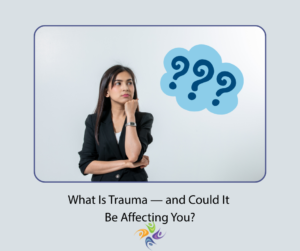 You’re not falling apart. In fact, you’re managing work, relationships, and the daily grind. But something feels off. Maybe you react more intensely than a situation seems to call for. Perhaps you feel far away from the people you love, even when you’re right next to them. Likely, you’ve been carrying something for a long time, and you’ve never quite had the words for it.
At The Relationship Therapy Center, we work with people throughout Roseville, Fair Oaks, and the Sacramento area who feel exactly this way. And one of the most common things we hear is: “I’m not sure what I went through was bad enough to be called trauma.” If that resonates, this post is for you.
Here’s what we’ve learned: trauma doesn’t always announce itself. More often than not, it quietly shapes how you see yourself, how you respond to conflict, and the quality of your closest relationships. Our work in trauma therapy often starts with exactly this question: could what I’m carrying actually be trauma?
What Is Trauma, Exactly?
When most people hear the word “trauma,” they picture something extreme — combat, a violent assault, a catastrophic accident. And yes, those experiences absolutely qualify. But trauma is much broader than that.
At its core, trauma is what happens inside you when something overwhelming, like an event, a relationship, or a pattern of experiences, exceeds your ability to process it at the time. It’s not about the size of what happened. It’s about how your nervous system responded — and whether that response got stuck.
Trauma Is About Your Experience, Not the Event
Two people can go through the exact same situation and walk away with completely different outcomes. One may process it and move forward. Another may carry the emotional weight for years.
Neither response is wrong.
Trauma isn’t defined by a checklist of events. It’s defined by how your system experienced and stored what happened. If something still affects you today — emotionally, relationally, or physically — it matters.
From Survival Response to Lasting Tendencies
After a difficult experience, your mind and body adapt to protect you. You might:
- Become hyper-aware of others’ moods
- Avoid conflict at all costs
- Shut down when things feel overwhelming
- Stay constantly “on guard.”
At first, these responses are adaptive. They help you survive something hard.
Over time, though, they can become tendencies — patterns that continue long after the original situation has passed. And instead of protecting you, they can start to limit you.
Framing these as tendencies, not flaws, matters. It reduces shame and opens the door to change.
Big T vs Small t Trauma
Trauma isn’t one-size-fits-all.
Big T trauma includes events that are clearly overwhelming:
- Physical or sexual assault
- Serious accidents
- Natural disasters
- Life-threatening situations
Small t trauma includes experiences that may seem less dramatic but are still deeply impactful:
- Growing up with constant criticism
- Emotional neglect or lack of support
- A controlling or unpredictable relationship
- Repeated humiliation or dismissal
Both types can leave lasting imprints. Both deserve attention.
How Trauma Shows Up in Relationships
One of the clearest places trauma appears is in your closest relationships.
It may look like:
- Pulling away when someone gets too close
- Reacting strongly during conflict
- Struggling to trust or feel safe
- Difficulty accepting comfort or support
Trauma doesn’t just live in your past — it often shows up in how you connect, communicate, and respond to the people you care about most.
How Do I Know If What I Went Through “Counts” as Trauma?
This is one of the most common questions people ask — and it usually comes from those who’ve been carrying more than they realize.
The truth is simple: there’s no minimum threshold. If your nervous system experienced something as overwhelming, and you’re still feeling the effects, it counts.
Why People Dismiss Their Own Experiences
Many people minimize what they’ve been through because:
- “Others had it worse.”
- “Nothing extreme happened.”
- “I should be over it by now.”
But trauma isn’t a competition. Your experience doesn’t need to be the worst to matter.
Commonly Overlooked Sources of Trauma
Some of the most common sources of trauma don’t look dramatic on the surface:
- Growing up in a home with unpredictable anger
- Having emotionally unavailable caregivers
- Being in a controlling or critical relationship
- Witnessing someone else’s suffering
- Working in high-stress caregiving roles
Relational trauma — patterns within relationships over time — is especially powerful and often overlooked.
Signs That Something May Have Left a Mark
If you’re unsure, here are a few signs that something may still be affecting you:
- You react more intensely than a situation seems to call for
- You go numb or shut down during conflict
- You feel like you’re carrying something you can’t quite name
- You’re harder on the people closest to you than you want to be
- You’ve worked hard to feel okay — and something still feels off
- You push people away when they get too close
If you see yourself in this list, you’re not alone — and it’s worth exploring further. (See: How Do I Know If What I Went Through “Counts” as Trauma?)
What Does Unresolved Trauma Look Like in Adults?
Unresolved trauma doesn’t usually look dramatic. Most people experiencing it are still functioning — going to work, maintaining relationships, showing up for life.
But underneath, something feels misaligned.
Emotional and Behavioral Signs
- Feeling emotionally numb or disconnected
- Irritability or unexpected anger
- Constant alertness or anxiety
- A persistent sense that something is wrong
The Role of Secrecy and Self-Protection
Many people carry parts of their story they haven’t shared — sometimes not even with themselves.
This isn’t dishonesty. It’s protection.
At some point, keeping things hidden helped you feel safe. In therapy, creating space for those parts to surface gently is often where healing begins.
Trauma in Relationships
This is often where trauma becomes most visible:
- Difficulty accepting affection
- Shutting down or escalating during conflict
- Feeling distant from people you love
- Repeating patterns you don’t fully understand
When one partner becomes overwhelmed, the other often follows — creating cycles that feel hard to break.
First Responders and Invisible Trauma
For first responders and caregivers, trauma can be especially hidden.
You may:
- Stay in “work mode” at home
- Feel emotionally unavailable without realizing it
- Struggle to transition between environments
Partners often experience this as distance or disconnection — even when that’s not your intention.
(See: What Does Unresolved Trauma Look Like in Adults?)
What Are Some Common Examples of Trauma?
Trauma can come from a single moment — or from years of smaller experiences that add up over time.
Here are some common examples:
- Betrayal or infidelity in a relationship
- Physical, emotional, or sexual abuse
- Growing up with a critical or unpredictable parent
- Sudden loss or prolonged grief
- Medical trauma or difficult health experiences
- Chronic exposure to others’ suffering
- Long-term controlling or dismissive relationships
- Accidents or life-threatening events
Many people pause when reading a list like this and think: I’ve never called that trauma before.
That realization can be the beginning of something important.
What Happens If You Don’t Treat Trauma?
Trauma doesn’t usually stay static. Over time, it tends to expand its influence.
When Coping Becomes a Pattern
The strategies that once helped you cope — avoidance, emotional shutdown, hypervigilance — can become automatic patterns.
And eventually, they may start causing more problems than they solve.
The Impact on Relationships
Often, the clearest effects show up in relationships:
- Emotional distance
- Repeated conflict cycles
- Feeling stuck despite effort
Sometimes, even strong couples therapy work hits a wall — and underlying trauma is part of the reason.
Long-Term Emotional and Physical Effects
Untreated trauma can contribute to:
- Anxiety and depression
- Sleep issues
- Physical tension or fatigue
- Difficulty enjoying life
But here’s the hopeful part: it’s treatable.
Trauma doesn’t have to define your future.
(See: What Happens If Trauma Goes Untreated?)
Can Trauma Actually Be Healed?
Yes — and not just in theory.
Approaches like EMDR and Brainspotting work directly with how the nervous system stores trauma, helping the brain and body process what was previously stuck.
Healing doesn’t mean forgetting. It means the past no longer controls the present.
At The Relationship Therapy Center, we take a whole-person approach:
- Individual trauma work
- Relationship-focused care
- Therapists trained in both trauma and couples therapy
This means you don’t have to choose between working on yourself and your relationship — both can happen together.
Healing often leads to:
- Feeling more present in your body
- Better sleep
- Reduced anxiety
- Stronger, safer relationships
- The ability to enjoy your life again
And importantly, the process is collaborative and paced. You won’t be pushed before you’re ready.
FAQs About Trauma
Is trauma the same as PTSD?
No. PTSD is a formal diagnosis, but many people experience trauma without meeting the full criteria. Both deserve care and attention.
What’s the difference between trauma therapy and regular talk therapy?
Trauma therapy uses approaches like EMDR and Brainspotting that work with how trauma is stored in the body and brain — not just how we talk about it.
Can I do trauma therapy while in couples counseling?
Yes. In many cases, they work best together. Individual healing often supports relationship growth.
Begin Trauma Therapy in the Sacramento Area
Whatever brought you here — a feeling you can’t explain, patterns you can’t break, or a quiet sense that something isn’t resolved — you don’t have to keep carrying it alone.
At The Relationship Therapy Center in Fair Oaks and Roseville, we specialize in helping people understand and heal from trauma. Our team is trained in evidence-based approaches and deeply understands how trauma shows up in relationships.
If you’re ready to take the next step, explore our trauma therapy services or reach out for a free 15-minute consultation.
Healing is possible — and it can start sooner than you think.
Begin Trauma Therapy in the Sacramento Area or Online:
Are you ready to find peace and healing after trauma? We are here to support you and provide high-quality evidence-based trauma treatment to people in the Sacramento Area and online for people living in the state of California. To begin trauma therapy in Fair Oaks, CA or Roseville, CA, please follow these steps:
- Reach out to our relationship therapy clinic for a free 15-minute phone consultation to learn more about trauma therapy.
- Meet with one of our compassionate trauma therapists.
- Begin trauma treatment and regain control in your life.
Other Services Offered at The Relationship Therapy Center in California:
In addition to trauma therapy, Our Sacramento area counseling clinics located in Roseville and Fair Oaks, CA are pleased to offer a variety of mental health services. Our couples services include: Counseling after infidelity, sex therapy, co-parent counseling, family therapy, divorce counseling, intensive couples retreats, and premarital counseling. Individual therapy services include, therapy for children, teen therapy, depression treatment, and individual relationship counseling. Our therapists offer online counseling in California to treat a variety of mental health concerns. Please reach out to our Sacramento area therapy office to learn more about the many ways we can help you or your loved ones heal and grow.
Certified Gottman Therapist
Nancy Ryan, LMFT & Certified Gottman Therapist, is the Founder and Clinical Director of Relationship Therapy Center, with 15+ years of experience supporting clients in Sacramento, Placer, and El Dorado Counties, and with offices in Roseville, CA, and Fair Oaks, CA. Our team also supports clients throughout California, Idaho, and Washington
She specializes in couples counseling, mentoring, and training her therapists on how to be excellent therapists. Nancy is also featured in a variety of media and provides couples therapy weekend workshops and retreats.
Relationship Therapy Center uses evidence-based approaches such as EMDR for trauma, Cognitive Behavioral Therapy (CBT), Acceptance and Commitment Therapy (ACT), Dialectical Behavior Therapy (DBT), Mindfulness, and Motivational Interviewing to treat individuals. Family therapy focuses on family systems and Play Therapy for children. Evidence-based couples therapy includes using the Gottman Method, Gottman Method Affair recovery/infidelity counseling, Emotionally Focused Therapy (EFT), Attachment therapy, and David Schnarch's Crucible Therapy, including differentiation. The whole team is in weekly training on trauma-informed care, somatic techniques, sex therapy, and different topics each year.
- Therapist for Childhood Emotional Neglect - October 8, 2026
- How do I Know if I Have Postpartum Depression? - October 1, 2026
- Is It a Midlife Crisis? - September 24, 2026