
 You’ve probably heard about the “seven-year itch” or been warned that the first year of marriage is the hardest. But if you’re in year three—or year fifteen—and things feel harder than they should, you might be wondering: Is this normal? Or is something wrong with us?
The truth is, there’s no single year that breaks marriages. But there are seasons and transitions that put relationships to the test. Here’s what we’ve learned from years of couples therapy working with couples throughout Fair Oaks, Roseville, and the greater Sacramento area.
Is There Really a “Toughest Year” of Marriage?
There isn’t one universal “danger year.” Research points to several high-risk seasons: the first year as couples adjust, years five through seven when routines can feel stale, and major transitions like parenting or an empty nest. The toughest time usually comes when the relationship stops being prioritized—often without anyone realizing it.
 Let’s retire the idea that marriage comes with a single “boss level” year where your relationship either survives or explodes. Real life is messier than that—and honestly, more hopeful.
What we consistently see is that couples struggle less because of a number on the calendar and more because of what’s happening in their world: stress, transitions, and disconnection that slowly become normal.
The first year can be tough because you’re adjusting expectations and merging two real lives—two personalities, two histories, two families, and two versions of “the right way to do things.” (Spoiler: both people believe their version is the right one.) This is often when couples realize, with surprise, that they married a wonderful human… who is still a human.
Years 5–7 are often another pressure point. The initial excitement has faded. Routines get repetitive. The relationship can start to feel like a well-run household with less spark—especially if careers are peaking and kids are young. This is where people quietly wonder, “Is this it?” Not because they don’t love each other, but because the relationship hasn’t been getting oxygen.
Here’s the real pattern: couples who have skills to navigate transitions do better than couples who white-knuckle through them. Tools matter. So does prioritizing the friendship underneath the partnership.
And if you’re in a hard season and wondering <u>”when should a couple go to marriage counseling”</u>—you don’t have to wait until things are unbearable. You can come in when the distance is just starting, not after it’s calcified.
What Are the Most Difficult Transitions in Married Life?
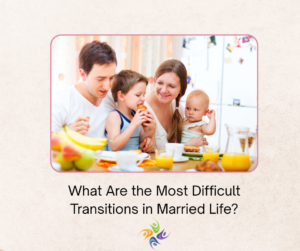 The hardest transitions are the ones that reshape roles, routines, and identity all at once. New parenthood, career changes, caring for aging parents, the empty nest, and retirement commonly strain connections. These seasons don’t damage marriages because couples “fail”—they strain marriages because life gets heavy and the relationship gets sidelined.
Transitions are sneaky. They don’t usually arrive with a dramatic announcement like, “Hello, I’m here to test your marriage.” They show up as schedules, sleep deprivation, new responsibilities, and shifting identity—until one day you look at your partner and think, “When did we stop feeling like us?”
Here are the most common pressure points we see:
Becoming parents.
This one is big. Less sleep, less time, less energy, less couple connection. It’s not uncommon for couples to unintentionally move into survival mode: manage diapers, bottles, daycare, work, repeat. The relationship gets put on the back burner “until things settle down.” But things rarely settle down on their own.
Career peaks and shifts.
Long hours at UC Davis Health, Kaiser, Sutter, or managing a team at a Folsom tech company can drain the emotional bandwidth needed for connection at home. Even good career changes can create stress. Job loss or a pivot can shake identity and financial security, which often shows up as irritability, anxiety, or distance—not because someone doesn’t care, but because they’re scared.
The squeeze generation.
Caring for aging parents while still raising kids creates enormous stress—often with little acknowledgment. Couples can become task managers, triage nurses, and logistics coordinators, leaving very little room for tenderness.
Empty nest.
This one catches couples off guard. You’ve spent years focusing on the kids and their needs, and suddenly you’re facing each other across the dinner table wondering who this person is now—and who you are. Some couples realize they’ve drifted further than they knew, because the kids unknowingly acted as a buffer.
Retirement.
Another identity shift. Now you’re together more—sometimes a lot more—and if the friendship hasn’t been nurtured, that increased proximity can feel like pressure rather than comfort.
The common thread: transitions strain relationships when couples don’t have shared tools—or when they haven’t maintained their friendship along the way.
Part of what we help couples explore is what “husband” and “wife” (or “partner”) actually mean to each of them now—and how to build a shared vision for whatever chapter they’re entering, rather than just reacting to it.
At What Stage Do Most Marriages Fail?
 Divorce tends to peak in two windows: early in marriage (often years 1–2) and later (often around years 7–8 or after kids leave home). But statistics don’t tell the whole story. The real predictors are relational patterns—especially the Four Horsemen—and whether positive connection still outweighs negativity.
It’s true that divorce data often shows two common windows where marriage endings spike.
Early divorces (years 1–2) often happen because reality hits hard: couples discover fundamental incompatibilities, mismatched expectations, or they simply weren’t ready for the demands of partnership. Sometimes they love each other but don’t know how to do life together without constant conflict.
Later divorces (often around years 7–8, or after kids leave home) can be the result of accumulated distance. It’s less about one big blow-up and more about erosion—years of small disconnections that never got repaired.
There’s also the “gray divorce” trend—divorce rates among couples over 50 have risen significantly. Often, couples realize once the kids are gone that they’ve been living parallel lives: functioning, co-parenting, getting things done… but not truly connected.
But here’s the problem with focusing too much on the “stage”: some couples stay married but aren’t thriving. They’re enduring. They’re polite. They’re exhausted. They’ve stopped fighting because they’ve stopped hoping.
What actually predicts failure isn’t the year—it’s the patterns.
Gottman’s research highlights four patterns that do the most damage over time: criticism, contempt, defensiveness, and stonewalling (the Four Horsemen). When those patterns become the main communication style, the relationship starts to feel emotionally unsafe.
Another key research marker is the 5:1 ratio: healthy couples tend to maintain five positive interactions for every one negative, even during conflict. When that ratio flips—when negativity becomes the dominant tone—trouble follows.
We work with couples at every stage—from engaged couples doing premarital work to empty nesters rebuilding after decades of drift. With over 15 years of experience, we’ve seen couples come back from what felt like the brink. We’ve also seen couples who “looked fine” from the outside finally acknowledge they’d been disconnected for years.
Warning signs that a transition has become a turning point
 You’re handling the logistics of life together, but have stopped sharing your inner worlds
- You feel more like business partners or co-parents than romantic partners
- You’ve stopped turning toward each other when stressed—and started turning away
- You can’t remember the last time you felt like a team
 You’re handling the logistics of life together, but have stopped sharing your inner worlds
If this sounds familiar, couples therapy and marriage counseling can help you reconnect before the distance becomes permanent.
Begin Couples Therapy or Marriage Counseling in the Sacramento Area
Hard seasons are normal—but staying stuck isn’t required. Couples therapy can help you build the skills to navigate transitions as a team, rebuild friendship, and repair conflict patterns before they harden into resentment. You don’t have to wait for a crisis to get support—early support often creates the best outcomes.
 Every marriage goes through hard seasons. But you don’t have to navigate them alone—or wait until you’re in crisis to get support.
At The Relationship Therapy Center, we help couples build the skills to navigate transitions together rather than letting them pull them apart. Whether you’re adjusting to new parenthood, staring down an empty nest, navigating career stress, or somewhere in between, we’re here.
With offices in Roseville and Fair Oaks, we work with couples throughout the Sacramento area—in person and via telehealth across California.
And if you’re finding yourself wondering whether what you’re experiencing is “normal” or a sign of deeper trouble, I’ll leave you with this: normal doesn’t always mean healthy. Sometimes “normal” just means common—and common is exactly what we can change with the right tools and support. Contact us to set up a free consultation.
Other Services Offered at The Relationship Therapy Center in California:
In addition to couples counseling, Our Sacramento area counseling clinics located in Roseville and Fair Oaks, CA are pleased to offer a variety of mental health services. Our couples counseling services include: Counseling after infidelity, sex therapy, co-parent counseling, family therapy, divorce counseling, couples therapy retreats, and premarital counseling. Our individual therapy services include, anxiety treatment, trauma therapy, teen therapy, therapy for children, codependency counseling, depression treatment, and individual relationship counseling. We also offer online counseling to California residents. Please contact our office to learn more about the many ways we can help you and your loved ones.
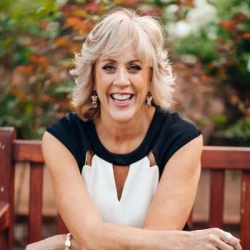
Certified Gottman Therapist
Nancy Ryan, LMFT & Certified Gottman Therapist, is the Founder and Clinical Director of Relationship Therapy Center, with 15+ years of experience supporting clients in Sacramento, Placer, and El Dorado Counties, and with offices in Roseville, CA, and Fair Oaks, CA. Our team also supports clients throughout California, Idaho, and Washington
She specializes in couples counseling, mentoring, and training her therapists on how to be excellent therapists. Nancy is also featured in a variety of media and provides couples therapy weekend workshops and retreats.
Relationship Therapy Center uses evidence-based approaches such as EMDR for trauma, Cognitive Behavioral Therapy (CBT), Acceptance and Commitment Therapy (ACT), Dialectical Behavior Therapy (DBT), Mindfulness, and Motivational Interviewing to treat individuals. Family therapy focuses on family systems and Play Therapy for children. Evidence-based couples therapy includes using the Gottman Method, Gottman Method Affair recovery/infidelity counseling, Emotionally Focused Therapy (EFT), Attachment therapy, and David Schnarch's Crucible Therapy, including differentiation. The whole team is in weekly training on trauma-informed care, somatic techniques, sex therapy, and different topics each year.
- Can a Marriage Counselor Save a Marriage? - February 26, 2026
- Is Our Communication Bad Enough for Therapy? - February 19, 2026
- What are Examples of Trauma? - February 12, 2026