
 You’re not screaming at each other. There’s no slamming doors or ultimatums. But somewhere between morning coffee and falling asleep on opposite sides of the bed, you’ve started wondering: Is this just what marriage becomes?
Perhaps you’ve noticed the same argument recurring every few weeks. Or you’ve stopped sharing the small stuff—the frustrating meeting, the funny thing the dog did—because it feels like your partner isn’t really listening anymore. You’re not unhappy exactly, but you’re not connected either.
If you’re a busy professional in the Sacramento area—juggling demanding careers, kids’ schedules, and the endless logistics of life—it’s easy to tell yourself you’ll “work on the relationship” once things slow down. But things rarely slow down. And that quiet distance? It tends to grow.
The good news: You don’t have to wait until you’re “bad enough” to seek help. In fact, couples who come to couples therapy and marriage counseling before they’re ready to give up tend to see the best results.
This post will help you recognize when it might be time—and what to expect if you decide to take that step.
When Should You Know It’s Time for Marriage Counseling?
 The best time to start marriage counseling is before you’re ready to give up. If you’ve noticed recurring arguments, emotional distance, or that “roommate” feeling creeping in, those are signs therapy could help. You don’t need a crisis to benefit—early intervention often leads to faster, more lasting change.
Here’s what I see over and over with high-functioning couples (especially the ones who run companies, manage teams, lead classrooms, work in healthcare, or carry a million invisible responsibilities): you are excellent at investing in everything except the relationship itself.
You schedule the dentist. You keep up with labs, workouts, kid appointments, professional development, and the “one more email” at 9:30 PM. But the relationship? It becomes the bucket you assume will refill itself.
The research perspective is sobering: the average couple waits around six years after problems begin before getting help. By then, it’s not just “a communication issue.” It’s usually resentment, loneliness, and hopelessness that have been quietly marinating for a long time.
At The Relationship Therapy Center, about 90% of our couples complete a comprehensive relationship assessment (the Gottman assessment). It gives us—and you—a clear picture of what’s working, what’s strained, and what’s missing. Most couples find it weirdly relieving to get a map instead of guessing in the dark.
And yes: RTC is the place couples come before they’re about to break up. Not because we’re naïve about how hard marriage can be—but because we know what’s possible when you intervene early.
Consider marriage counseling if:
- You’re having the same argument repeatedly without resolution
- You feel more like roommates than partners
- One or both of you has withdrawn emotionally
- A major life transition is creating distance (new baby, career change, kids leaving home)
- You want to strengthen your relationship—not just fix problems
If any of those landed with a quiet “oof”… you’re not alone. And you’re not behind. You’re just noticing what matters.
What Does the Most Damage to a Marriage?
 Research shows that four specific patterns—criticism, contempt, defensiveness, and stonewalling—are the most destructive forces in a marriage. Known as the “Four Horsemen,” these behaviors can predict relationship failure with remarkable accuracy. The good news? Each one has a learnable antidote.
If relationships had a “check engine” light, the Four Horsemen would be the dashboard screaming, “Hey friend… we need to pull over.”
Here they are, in plain language:
- Criticism: Attacking your partner’s character instead of describing a behavior.
“You always…” “You never…” “What is wrong with you?” - Contempt: Disrespect, eye-rolling, sarcasm, mockery, superiority.
This is the single greatest predictor of divorce in Gottman’s research. - Defensiveness: Making excuses, playing the victim, counterattacking.
“Well, I wouldn’t have if you didn’t…” - Stonewalling: Shutting down, withdrawing, refusing to engage.
Often it looks like silence—but it feels like abandonment to the other partner.
These patterns usually don’t show up one at a time. They cycle. One partner criticizes, the other defends, then someone stonewalls, and contempt sneaks in as sarcasm or a sharp tone. It becomes the relationship’s default dance—until nobody wants to dance anymore.
At The Relationship Therapy Center, we don’t just tell couples to “communicate better.” We help you identify exactly which patterns are causing damage and then teach you the specific, research-backed antidotes and repair strategies.
And I’ll say this clearly, because it matters: while many therapists know the Four Horsemen from a weekend workshop, our team has mastered the full toolkit through ongoing training and supervision with the only Certified Gottman Therapist in Sacramento. That means you’re not getting generic couples counseling—you’re getting precise, method-based work.
The Antidotes
- Criticism → Gentle startup (expressing needs without blame)
- Contempt → Building a culture of appreciation
- Defensiveness → Taking responsibility, even for a small part
- Stonewalling → Physiological self-soothing and taking effective breaks
Understanding these patterns is the first step. But how do you know if your marriage is actually in trouble—or just going through a rough patch?
What Are the Signs of a Failing Marriage?
 Warning signs that a marriage is struggling include persistent negativity that outweighs the positive, emotional withdrawal from one or both partners, loss of friendship and fondness, and an inability to repair after conflicts. Research suggests healthy couples maintain a 5:1 ratio of positive to negative interactions—even during disagreements.
Some marriages in trouble are loud: lots of fights, sharp words, high emotion.
Others are quiet: minimal conflict, minimal connection, and a strange calm that feels more like distance than peace.
One of the clearest Gottman findings is the “magic ratio”: healthy couples tend to have about 5 positive interactions for every 1 negative interaction, even during conflict. That doesn’t mean they never snap. It means the relationship has enough warmth, humor, affection, interest, and repair to buffer hard moments.
Signs that go beyond fighting:
- You’ve stopped turning toward each other with the small stuff
- Bids for connection are ignored or rejected (even unintentionally)
- You feel lonely even when you’re together
- The fondness and admiration have faded
- After conflict, you can’t repair—things just stay cold
With over 15 years of experience working with couples, we’ve seen relationships struggle in many different ways. Some couples fight constantly. Others have stopped fighting altogether—because they’ve stopped engaging.
That’s why our comprehensive Gottman assessment is so helpful. It helps couples see clearly where they stand—including the ratio of positive to negative interactions in the relationship.
A struggling marriage isn’t necessarily a failing one. These patterns can be changed—especially when both partners are willing to learn new skills.
What Is the Toughest Year of Marriage?
 There’s no single “toughest year” that applies to everyone. Research points to several high-risk periods: the first year (adjusting expectations), years 5–7 (the “seven-year itch”), and major transitions such as becoming a parent or facing an empty nest. The toughest time is often when you stop prioritizing the relationship.
If you’re hoping I’ll say, “Year 7 is the danger zone, good luck,” I’m going to lovingly ruin that plan.
There isn’t a single hardest year—because marriages don’t end on a calendar. They strain under transitions, stress, and disconnection that goes unaddressed.
Common high-risk seasons:
- Early marriage: Adjusting to shared life, discovering differences, renegotiating expectations
- Parenting years: Less time, less energy, less couple connection (and lots of logistics)
- Career peaks: Demanding jobs, competing priorities, chronic exhaustion
- Empty nest: Facing each other without the kids as a buffer—and realizing you’ve drifted
The common thread is simple: transitions strain relationships when couples don’t have tools to navigate them.
We work with couples at every stage—from engaged couples preparing for marriage to empty nesters rediscovering each other after the kids leave home. Part of what we help couples explore is what “husband” and “wife” (or “partners”) actually mean to each of them, and how to build a shared vision for this new chapter—what Gottman calls shared meaning work.
And locally? Whether you’re both putting in long hours at Sutter Health or Intel, or you’re the one racing from drop-off at Skatetown Ice Arena in Roseville to your teen’s travel baseball practice in Folsom, every transition is an opportunity, if you know how to navigate it.
We Fight About the Same Thing Every Week—What Does That Mean?
 If you’re fighting about the same issue repeatedly, you’re likely dealing with what researchers call a “perpetual problem”—and you’re not alone. Studies show that 69% of relationship conflicts are perpetual, rooted in fundamental personality or value differences. The goal isn’t to “solve” them—it’s to learn to dialogue about them without damaging the relationship.
This is the moment where many couples feel doomed. They’ll say, “We’ve talked about this a thousand times. Nothing changes.”
Here’s the plot twist: about 69% of relationship conflict is perpetual. Meaning: it’s rooted in personality differences, value differences, needs differences, or different life histories—not a simple “fix it once” problem.
There are solvable problems (logistics, schedules, division of labor that can be negotiated.) And there are perpetual problems (the themes that keep returning because they’re attached to deeper meaning).
Perpetual problems become gridlocked when the conversation isn’t actually about dishes, money, or sex—it’s about the dream underneath.
Examples:
- Different needs for closeness vs. independence
- Different approaches to money (security vs. freedom)
- Different parenting philosophies
- Different “meta-emotions” (beliefs about emotions themselves—like whether feelings are to be expressed or controlled)
We use specific techniques, such as the Dreams Within Conflict intervention, to help couples understand why an issue matters so much to each person. Often, beneath a fight about chores or money is a deeper dream or value that hasn’t been heard.
One pattern we see frequently is couples fighting about emotions themselves. One partner believes expressing feelings is important; the other learned that emotions should be controlled. This creates conflict that looks like communication problems—but it’s actually about something much deeper. We have 4–5 specific interventions for this exact issue.
The couples who do best aren’t the ones who never fight. They’re the ones who learn to navigate their differences without hurting each other in the process.
Signs a perpetual problem has become gridlocked:
- The same argument escalates quickly every time
- You feel unheard or dismissed when you try to discuss it
- The issue has started to feel like a character flaw in your partner
- You’ve stopped trying to talk about it altogether
Is It Okay That I Don’t Feel “In Love” Right Now?
 Yes—feeling temporarily disconnected doesn’t mean your marriage is over. The “in love” feeling ebbs and flows naturally, especially during stressful seasons. What matters more is whether the friendship, fondness, and willingness to turn toward each other are still present. Those can be rebuilt, even when the spark feels dim.
Let me normalize something that couples often whisper like it’s a secret confession: love has seasons.
That “in love” feeling is not a stable personality trait. It’s a state—one that gets impacted by stress, sleep deprivation, grief, hormones, work pressure, parenting, resentment, and the slow creep of emotional distance.
Gottman’s research points to something far more predictive than butterflies: friendship. Friendship is the foundation of lasting love—knowing each other, respecting each other, and staying emotionally connected in the small moments.
Also, fondness and admiration serve as an antidote to contempt. When couples can still access what they appreciate about each other, repair becomes possible.
A more serious warning sign is not “I don’t feel in love.” It’s:
- “I don’t like who my partner is.”
- “I can’t remember what I ever admired.”
- “Everything they do irritates me.”
At The Relationship Therapy Center, we help couples rebuild the friendship that may have gotten buried under stress, resentment, or just the busyness of life.
Simple practices—like actually knowing what’s stressing your partner this week (Love Maps) or creating small rituals of connection—can reignite fondness even when the spark feels distant.
And here’s a gentle truth: the fact that you’re asking this question—that you’re concerned about the relationship—is actually a hopeful sign. Couples who’ve completely given up usually don’t wonder if they should feel differently.
Can Marriage Counseling Really Save a Marriage?
 Yes—when couples are willing to do the work, marriage counseling can absolutely help. Research on the Gottman Method shows significant improvements in relationship satisfaction for couples who complete treatment. But success depends on both partners’ willingness to engage, the skill of the therapist, and getting help before too much damage has been done.
Skepticism makes sense. A lot of people have heard “therapy doesn’t work,” or they’ve tried counseling and left feeling worse.
Often, previous therapy didn’t help because:
- The therapist wasn’t trained in couples work (treating it like “individual therapy x 2”)
- Only 2–3 techniques were used instead of a full toolkit
- The therapist took sides (even unintentionally)
- The therapist didn’t know how to manage the dynamics between two people in real time
We frequently hear: “You’re our third couples therapist.” They learned “I statements,” but they’re still fighting in session. That’s because most therapists know a handful of tools. Our team has access to 52+ research-based interventions—and the training to know which ones to use, when.
As the only Certified Gottman Method Therapist in the Sacramento area, our clinical director personally mentors, trains, and supervises every couples therapist on staff. That means when you work with anyone at The Relationship Therapy Center, you’re benefiting from that level of expertise.
Our therapists don’t just attend a workshop and start seeing clients. They practice interventions through role-play and review video recordings of their sessions with timestamped feedback to continuously improve.
One more important reframe: a “successful” outcome doesn’t always mean staying together. Sometimes couples therapy helps partners realize—with support and clarity—that separating is the right choice. When that happens, they can do so thoughtfully and respectfully, rather than reactively.
How Do I Know If My Partner and I Should Stay Together?
 This is one of the most painful questions a person can face—and not one you should try to answer alone. Couples therapy can help you gain clarity by exploring whether the relationship can heal, what each partner is willing to work on, and whether staying together aligns with your values and well-being.
If you’re asking this question, I want to slow things down for a moment—because it’s heavy.
This isn’t the kind of question that should be decided in the middle of a fight, at 1:00 AM, after doom-scrolling relationship advice that makes you feel worse.
Couples therapy isn’t just for “saving” marriages. It’s also for gaining clarity.
Therapy can help you explore:
- Is there still fondness and respect beneath the hurt?
- Are both partners willing to do the work?
- What would need to change for this relationship to be healthy?
- What values and life dreams are at stake?
Sometimes the answer becomes clear through the process. And our goal isn’t to convince you to stay together or to split up. It’s to help you—both of you—make a thoughtful decision you can live with.
Even when couples decide to part ways, doing so with support often looks very different than doing it in the heat of pain. It can mean co-parenting well, maintaining respect, and avoiding years of regret.
If you’re asking this question, you deserve space to explore it honestly—not just in your own head, but with a skilled guide who can help you see clearly.
Begin Couples Therapy or Marriage Counseling in the Sacramento Area
 If something in your relationship is asking for attention, that isn’t failure—it’s information. At The Relationship Therapy Center, we help couples across the Sacramento area build stronger communication, deeper friendship, and healthier conflict skills using the Gottman Method. You don’t have to be in crisis to benefit—early support creates the best outcomes.
If you’ve read this far, something in your relationship is asking for attention. That’s not a failure—it’s an invitation.
At The Relationship Therapy Center, we work with couples throughout the Sacramento area—from our Roseville office near the Galleria to our Fair Oaks location just off Highway 50. Whether you’re dealing with the same recurring argument, navigating a major life transition, or simply feeling disconnected from the person you love, we’re here to help.
You don’t have to be in crisis to benefit. In fact, the couples who come in before things fall apart tend to see the best results.
Ready to take the next step?
- Contact us to schedule a consultation
- Meet with one of our Gottman-trained couples therapists
- Start building the relationship you both want
Other Services Offered at The Relationship Therapy Center in California:
In addition to couples counseling, Our Sacramento area counseling clinics located in Roseville and Fair Oaks, CA are pleased to offer a variety of mental health services. Our couples counseling services include: Counseling after infidelity, sex therapy, co-parent counseling, family therapy, divorce counseling, couples therapy retreats, and premarital counseling. Our individual therapy services include, anxiety treatment, trauma therapy, teen therapy, therapy for children, codependency counseling, depression treatment, and individual relationship counseling. We also offer online counseling to California residents. Please contact our office to learn more about the many ways we can help you and your loved ones.
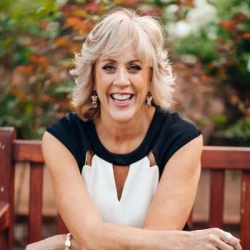
Certified Gottman Therapist
Nancy Ryan, LMFT & Certified Gottman Therapist, is the Founder and Clinical Director of Relationship Therapy Center, with 15+ years of experience supporting clients in Sacramento, Placer, and El Dorado Counties, and with offices in Roseville, CA, and Fair Oaks, CA. Our team also supports clients throughout California, Idaho, and Washington
She specializes in couples counseling, mentoring, and training her therapists on how to be excellent therapists. Nancy is also featured in a variety of media and provides couples therapy weekend workshops and retreats.
Relationship Therapy Center uses evidence-based approaches such as EMDR for trauma, Cognitive Behavioral Therapy (CBT), Acceptance and Commitment Therapy (ACT), Dialectical Behavior Therapy (DBT), Mindfulness, and Motivational Interviewing to treat individuals. Family therapy focuses on family systems and Play Therapy for children. Evidence-based couples therapy includes using the Gottman Method, Gottman Method Affair recovery/infidelity counseling, Emotionally Focused Therapy (EFT), Attachment therapy, and David Schnarch's Crucible Therapy, including differentiation. The whole team is in weekly training on trauma-informed care, somatic techniques, sex therapy, and different topics each year.
- Can a Marriage Counselor Save a Marriage? - February 26, 2026
- Is Our Communication Bad Enough for Therapy? - February 19, 2026
- What are Examples of Trauma? - February 12, 2026