
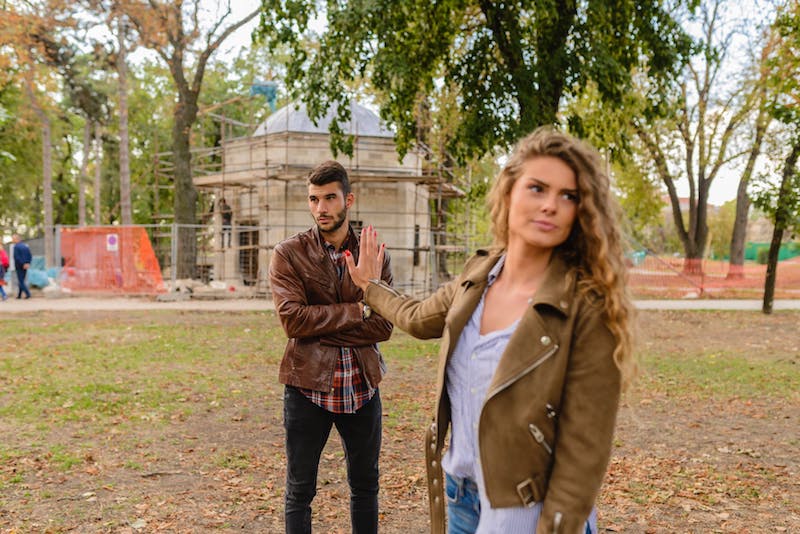
Are you in a Verbally Abusive Relationship?
A scientist conducted an experiment. She put frog number one into a pan of very hot water. The frog jumped right out. Next, she placed frog number two in a pan of cool water. Of course, this frog didn’t jump out. Very gradually, the scientist raised the water’s temperature. Then, this frog gradually adapted until it boiled to death. – Anonymous
Being in a relationship where there is verbal abuse conditions the spouse. In the same way, being abused is just like the second frog in the above example. Many times, partners of verbal abuse only recognize the abuse once they are away for a while.
How do you feel when you are verbally abused?
Verbal abuse may be overt – name-calling, angry outbursts, or attacks of character, like “You’re just too sensitive”. But it can also be covert or hidden. Statements like, “What do you mean? I didn’t mean that,” when the abuser did mean that, can make a person confused. The book by George Bach and Ronald Deutsch, “Stop! You’re Driving Me Crazy”, states that often the spouse of verbal abuse feels or experiences some of the following;
• Feeling temporarily thrown off balance or caught off guard
• Receiving double messages. So that they are somehow unable or fearful to ask for clarification.
• Generally feeling “bugged” by the simple presence of a person.
• Where one assumed goodwill, ill will seems to prevail
• One feels pushed around. As well as not being in control of one’s own direction.
• An uneasy, weird feeling of emptiness
• Sensing that something is wrong
If a partner is able to validate their own feelings, they will sometimes recognize that they feel diminished. As well as hurt, unrecognized, discounted, made fun of, ignored, and others.
The book, “The Verbally Abusive Relationship” by Patricia Evans, describes the general characteristics of verbal abuse and categorizes verbal abuse. I highly recommend this book if you relate to what follows.
What are the characteristics of verbal abuse?
- feels hurtful- especially when it is denied
- attacks the nature and abilities of the partner
- can be covert or overt
- voiced in an extremely sincere and concerned way
- is manipulative and controlling
- insidious – disregards, disrespects and devalues the partner
- unpredictable
- the real issue in the relationship
- expresses a double message- incongruence between the way the abuser speaks and real feelings
- usually escalates, increasing in intensity, frequency, and variety.
I know in many relationships, people think of abuse only in terms of physical abuse.
“He isn’t hitting me so how could I be abused?” Love relationships are the arena where we want love, support, acceptance, nurturing, intimacy – both emotional and physical, validation and someone to “have our back”. This is a place in healthy relationships where “two are better than one”. In abusive relationships there is stress, tension, a feeling on being unsafe. Similarily, a feeling of being out of balance, squashed, stymied, dragged down and can lead to low self-esteem and depression.
What are the signs of abuse?
Withholding
A choice to keep one’s thoughts, feelings, hopes and dreams to themselves. Then to remain silent and aloof toward one’s partner.
Countering
Arguing against partners’ thoughts, perceptions, and experience. Which denies the victim’s reality and prevents the abuser from knowing or accepting their partner’s views
Discounting
Denying the experience of the partner of the abuse. “Oh, you don’t know what you are talking about,” or “You’re making a big deal out of nothing.”
Verbal Abuse Disguised as a Joke
“ Man, you couldn’t find your head if it wasn’t attached.”
Blocking and Diverting
The topic is changed, and none of the abuser’s diversion answers the partner’s questions in a thoughtful and considerate way.
Accusing and Blaming
A verbal abuser will accuse his partner of some wrongdoing and blame the partner for his anger. To clarify, “ Stop just trying to pick a fight” or “Oh boy, you’re looking for trouble.”
Judging and Criticizing
“Can’t you take a joke?” “You idiot.” “ I wouldn’t have done it that way.”
Trivializing
Stating that what you have done or said is insignificant.
Undermining
Tactics like this not only withhold emotional support, but also erode confidence. “Why bother!” “Who asked you?”
Threatening
Manipulates the partner by bringing up her greatest fears.
Forgetting
Declaration by the abuser that what happened wasn’t abusive
Ordering
“ Get rid of this.” “What do you think you are doing? You’re not going out now.”
Denial
“I never said that.” “You’re getting upset about nothing!”
If you recognize any of these going on, I recommend that you pick up a book or go see a counselor because, left on your own, it will likely get worse.
Begin Therapy in the Sacramento Area or Online:
Are you ready to find peace and healing after tabuse? We are here to support you and provide high-quality, evidence-based treatment to people in the Sacramento Area and to people living in the state of California online. To begin trauma therapy in Fair Oaks, CA or Roseville, CA, please follow these steps:
- Reach out to our relationship therapy clinic for a free 15-minute phone consultation to learn more about trauma therapy.
- Meet with one of our compassionate therapists.
- Begin treatment and regain control in your life.
Other Services Offered at The Relationship Therapy Center in California:
In addition to individual therapy, our Sacramento area counseling clinics located in Roseville and Fair Oaks, CA, are pleased to offer a variety of mental health services. Our couples services include: Counseling after infidelity, sex therapy, co-parent counseling, family therapy, divorce counseling, intensive couples retreats, and premarital counseling. Individual therapy services include therapy for children, teen therapy, depression treatment, and individual relationship counseling. Our therapists offer online counseling in California to treat a variety of mental health concerns. Please reach out to our Sacramento area therapy office to learn more about the many ways we can help you or your loved ones heal and grow.
Certified Gottman Therapist
Nancy Ryan, LMFT & Certified Gottman Therapist, is the Founder and Clinical Director of Relationship Therapy Center, with 15+ years of experience supporting clients in Sacramento, Placer, and El Dorado Counties, and with offices in Roseville, CA, and Fair Oaks, CA. Our team also supports clients throughout California, Idaho, and Washington
She specializes in couples counseling, mentoring, and training her therapists on how to be excellent therapists. Nancy is also featured in a variety of media and provides couples therapy weekend workshops and retreats.
Relationship Therapy Center uses evidence-based approaches such as EMDR for trauma, Cognitive Behavioral Therapy (CBT), Acceptance and Commitment Therapy (ACT), Dialectical Behavior Therapy (DBT), Mindfulness, and Motivational Interviewing to treat individuals. Family therapy focuses on family systems and Play Therapy for children. Evidence-based couples therapy includes using the Gottman Method, Gottman Method Affair recovery/infidelity counseling, Emotionally Focused Therapy (EFT), Attachment therapy, and David Schnarch's Crucible Therapy, including differentiation. The whole team is in weekly training on trauma-informed care, somatic techniques, sex therapy, and different topics each year.
- Can a Marriage Counselor Save a Marriage? - February 26, 2026
- Is Our Communication Bad Enough for Therapy? - February 19, 2026
- What are Examples of Trauma? - February 12, 2026