
 Over the past few years, couples therapy intensives have become increasingly popular, including here in Sacramento and throughout Northern California. What was once viewed as a specialized approach is now often promoted as a quicker path to meaningful change.
Couples intensives are being marketed everywhere right now, and many therapists are taking training on how to promote them. But the real question is this: does the therapist have the advanced clinical training, structure, and experience needed to make an intensive actually effective?
Not all intensives are created equal.
Recently, I saw a question posted in a Sacramento therapist referral group:
“Does anyone offer couples intensives?”
Within a day, there were more than 15 responses. What struck me was not the number of replies. It was the absence of follow-up questions about what each therapist actually meant by “intensive.”
No one discussed the therapeutic model.
There was no clarification about the therapist’s specialization.
No one mentioned assessment, structure, pacing, or follow-up care.
And that matters.
Because a couple’s therapy intensive should not be just a really long therapy session. If you are going to invest significant time, money, and emotional energy into intensive work, you deserve to compare apples to apples.
Nearly a Decade of Couples Intensives in the Sacramento Area
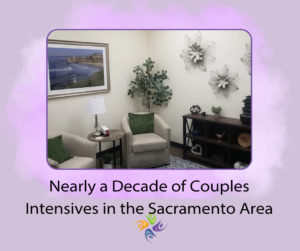 At our Sacramento-area practice, couples intensives are not new. We have offered structured, research-informed intensive therapy for almost ten years, long before intensives became widely marketed across Northern California.
Before intensives became more common, we were already doing the careful clinical work behind the scenes: refining assessment protocols, pacing, and integration systems so the process could be both powerful and responsible.
When thoughtfully designed and skillfully led, a couples therapy intensive can help create clarity, forward movement, and meaningful repair.
But simply spending more time in therapy does not guarantee transformation.
An Intensive Is Not Just “More Hours”
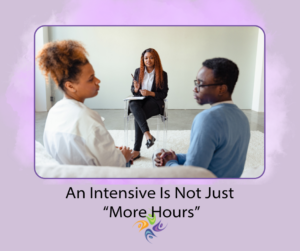 A true marriage intensive therapy process is not simply several therapy sessions stacked together.
It should be designed with:
- A thorough assessment process
- A research-informed model of couples therapy
- A skilled couples therapist
- Careful pacing
- Emotional containment
- A plan for integration after the intensive
As a Certified Gottman Therapist, I use the Gottman Method to guide our assessment, structuring, pacing, and intervention with couples. This is very different from simply completing a training. It reflects years of clinical practice built around a research-informed model, which matters deeply in high-acuity couples work.
At the Relationship Therapy Center, our intensive process has been carefully designed, and the clinicians who offer this work are hand-picked and trained by me, the Director of RTC and a Certified Gottman Therapist.
If you are considering a couples therapy intensive, it is reasonable to ask:
- What evidence-based framework guides the work?
- Does the therapist specialize in couples therapy?
- How many intensives has the therapist conducted?
- How long has the therapist been offering this format?
- What happens before and after the intensive?
Experience, specialization, and structure are more than marketing language. They are what responsible clinical care is built on.
Not All Relationship Crises Are the Same
 Different couples need different kinds of intensive work.
A recently disclosed affair calls for a different clinical structure than years of emotional distance or quiet resentment.
A high-conflict relationship needs a different level of containment and direction than a couple who has slowly drifted apart.
Affair recovery often requires trauma-informed repair, emotional stabilization, and careful rebuilding of trust.
Long-term disconnection may require rebuilding the couple’s friendship, emotional intimacy, rituals of connection, and shared meaning.
High-conflict dynamics require thoughtful pacing, emotional regulation skills, and strong therapeutic leadership in the room.
Without these distinctions, an intensive may create more overwhelm than clarity. With accurate assessment, the work becomes more targeted and effective.
Clinical Depth Matters in Couples’ Intensive Work
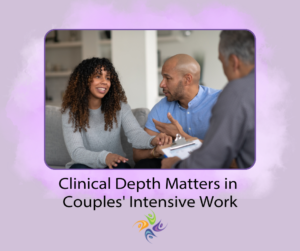 A couple’s therapy intensive often surfaces issues quickly. When couples spend concentrated time in structured therapeutic work, the deeper emotional patterns often begin to emerge.
A therapist offering intensives should have experience with:
- Co-occurring mental health conditions
- Trauma and attachment injuries
- LGBTQ+ relationship dynamics
- Partners navigating addiction recovery
- High-conflict escalation
- Affair recovery
- Discernment work
- Emotional regulation and de-escalation
Intensive work amplifies what is already present in the relationship. Clinical depth helps ensure that amplification leads to repair rather than destabilization.
Repair or Discernment: What Is the Real Goal?
 Not every couple seeking a relationship intensive is ready for repair.
Some couples come in unsure whether they want to repair the relationship or decide if staying together is still the right choice. Discernment work requires a different structure than repair-focused therapy.
Before beginning an intensive, it is important to clarify the real goal of the work:
Are both partners willing to rebuild?
Or are they still deciding whether the relationship should continue?
Clarity about readiness is foundational. Without it, even a well-designed intensive can feel misaligned.
For some couples, the first step is not to repair. It is discernment.
Why Some Couples Therapy Intensives Fall Short
 When intensives do not produce lasting change, it is often because something important was missing from the process.
Common reasons intensives fall short include:
- The assessment was not thorough enough before the intensive began.
- The therapist lacked sufficient specialization in high-acuity couples work.
- The process created emotional intensity without enough clinical structure.
- There was no clear plan for integration, follow-up, or continued support after the intensive.
- The couple’s uncertainty about staying together was treated as though both partners were ready for repair.
A couple’s intensive often amplifies both what is working and what is breaking down. Without careful structure, that intensity can feel overwhelming. With thoughtful containment, it can become clarifying and productive.
Clinical Examples: Why Structure Matters
To illustrate why structure matters, consider three different couples seeking a couples therapy intensive.
One couple may come in shortly after an affair has been disclosed. Emotions are still raw. One partner may be overwhelmed by betrayal trauma, while the other is caught between defensiveness, shame, and fear. In this situation, the work must begin with stabilization, careful pacing, and a clear trust-rebuilding framework before communication tools can be meaningfully introduced.
Another couple may come in after years of quiet emotional distance. There may not be intense conflict or dramatic blowups, just a steady sense of disconnection. They often describe feeling more like “roommates” than partners. In this case, the intensive focuses on rebuilding friendship, strengthening emotional attunement, and creating shared meaning again.
A third couple may arrive with conflict that escalates quickly and often. Conversations can move rapidly into criticism, defensiveness, and emotional reactivity. Their intensive needs strong therapeutic containment, interruption of the negative cycle, and help with regulation before deeper vulnerability can safely come forward.
All three couples may request a “couples therapy intensive.”
But the structure, pacing, and clinical focus for each must be different.
This is why assessment and specialization matter.
Considering a Couples Therapy Intensive in Sacramento?
 If you are exploring whether a structured, research-informed couples therapy intensive is the right next step for your relationship, we begin with a consultation to assess readiness and fit.
For some couples, the goal is repair.
For others, the first step may be discernment.
For many, the work begins by slowing the cycle enough to understand what is really happening beneath the conflict.
A well-designed intensive should help you understand where you are, what your relationship needs, and whether the format is appropriate for your situation.
Want to know more? Learn more about our couples therapy intensives in Northern California.
Frequently Asked Questions About Couples Therapy Intensives
What is a couples therapy intensive?
 A couples therapy intensive is an extended, structured therapy experience designed to help couples make meaningful progress in a shorter period of time than traditional weekly sessions. Instead of meeting for 50–90 minutes once a week, couples spend concentrated time with a trained couples therapist to assess patterns, slow down conflict, rebuild connection, and practice new tools in real time.
At the Relationship Therapy Center, our intensives are not simply longer sessions. They include assessment, clinical structure, pacing, and a clear plan for what the couple needs most, whether that is affair recovery, high-conflict stabilization, rebuilding friendship, or deciding whether repair is possible.
How is a couple’s intensive therapy different from regular weekly couples therapy?
Weekly couples therapy can be very helpful, but it can also feel slow when couples are in crisis, dealing with betrayal, or repeating the same argument week after week.
A couple’s intensive gives the therapist and couple more uninterrupted time to understand the deeper pattern, intervene in real time, and build momentum before everyday life pulls the couple back into old habits.
The difference is not just the number of hours. A strong intensive should include a structured assessment, a clear treatment focus, therapeutic containment, and a plan for what happens after the intensive.
How much does a couples therapy intensive cost in Sacramento or Northern California?
Couples therapy intensives are a greater investment than weekly sessions because they involve concentrated clinical time, preparation, assessment, and a customized treatment focus.
When comparing options, look beyond the price alone. Ask what is included, how many therapy hours you receive, whether the therapist specializes in couples work, what assessment process is used, and whether there is an integration plan after the intensive.
A lower-cost intensive may not be the better value if it lacks assessment, structure, specialization, or follow-up planning. The quality of the clinical process matters.
Can a couple’s intensive help after an affair or betrayal?
Yes, a couple’s intensive may help after an affair, but only when the work is carefully assessed and paced.
Affair recovery is not the same as basic communication coaching. One partner may be experiencing betrayal trauma, while the other may be defensive, ashamed, or fearful. That means the work often needs to begin with stabilization, containment, and a clear trust-rebuilding framework before communication tools can be fully integrated.
In affair recovery, moving too quickly into communication tools can miss the deeper trauma and trust rupture that need attention first.
How do we know if a couple’s intensive is right for us?
A couple’s intensive may be a good fit if you feel stuck in the same conflict cycle, have drifted into a roommate dynamic, are recovering from betrayal, are facing a major life transition, or want focused help before the relationship deteriorates further.
It can also be helpful for busy professionals who want concentrated time rather than trying to fit months of weekly sessions into already full schedules.
However, not every couple is ready for repair-focused intensive work. If one or both partners are unsure whether they want to stay, discernment may be needed first. A good intensive process should clarify whether the goal is to rebuild the relationship, stabilize high-conflict patterns, recover from betrayal, or determine whether the relationship can continue.
Call to Action
Learn More About Couples Therapy Intensives in Northern California
 If you are considering a couples therapy intensive in Sacramento, Roseville, Fair Oaks, or elsewhere in Northern California, we invite you to learn more about our structured, research-informed approach.
Our intensives are designed for couples who want more than a long session. They are designed with assessment, clinical structure, Gottman-informed interventions, and careful pacing so the work is focused, responsible, and meaningful.
Schedule a consultation to explore whether a couples therapy intensive is the right next step for your relationship.
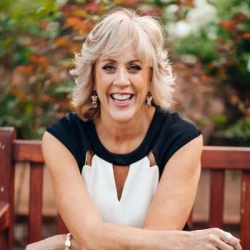
Certified Gottman Therapist
Nancy Ryan, LMFT & Certified Gottman Therapist, is the Founder and Clinical Director of Relationship Therapy Center, with 15+ years of experience supporting clients in Sacramento, Placer, and El Dorado Counties, and with offices in Roseville, CA, and Fair Oaks, CA. Our team also supports clients throughout California, Idaho, and Washington
She specializes in couples counseling, mentoring, and training her therapists on how to be excellent therapists. Nancy is also featured in a variety of media and provides couples therapy weekend workshops and retreats.
Relationship Therapy Center uses evidence-based approaches such as EMDR for trauma, Cognitive Behavioral Therapy (CBT), Acceptance and Commitment Therapy (ACT), Dialectical Behavior Therapy (DBT), Mindfulness, and Motivational Interviewing to treat individuals. Family therapy focuses on family systems and Play Therapy for children. Evidence-based couples therapy includes using the Gottman Method, Gottman Method Affair recovery/infidelity counseling, Emotionally Focused Therapy (EFT), Attachment therapy, and David Schnarch's Crucible Therapy, including differentiation. The whole team is in weekly training on trauma-informed care, somatic techniques, sex therapy, and different topics each year.
- Is It a Midlife Crisis? - September 24, 2026
- Therapy for Toxic Relationships - September 17, 2026
- The Survival Guide for ADHD Couples - September 10, 2026