
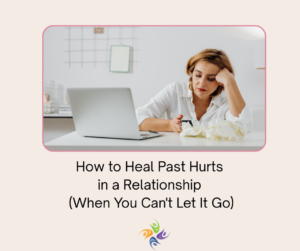
 You’ve tried to move on. Maybe you’ve even told yourself it shouldn’t still bother you. But something that happened—months ago, years ago—keeps coming back. A comment during a fight. A betrayal of trust. A moment when you needed your partner, and they weren’t there.
If you can’t let go of a past hurt in your relationship, there’s usually a reason. And it’s not because you’re “too sensitive” or holding a grudge. It’s because something important was never fully repaired.
At The Relationship Therapy Center in Fair Oaks and Roseville, couples therapy and marriage counseling often involve helping couples finally heal wounds that have been festering—sometimes for years.
Why Can’t I Let Go of What Happened?
If an old wound still hurts, it’s usually because the repair was incomplete or the pattern never truly stopped. Emotional injuries are real, and your nervous system remembers threats to safety and trust. Gottman calls these “regrettable incidents”—unprocessed moments that accumulate and become part of the negative story you tell about the relationship.
When people say, “Why can’t you just let it go?” what they usually mean is, “I’m uncomfortable with how much this still matters.” But the fact that it still matters is information, not a character flaw.
Here are common reasons past hurts linger:
Common reasons past hurts don’t go away
- The repair was incomplete. Maybe there was an apology, but the underlying hurt wasn’t actually addressed.
- The same pattern keeps repeating. If the behavior keeps happening, the “past” wound is still happening—just in updated forms.
- It touched something deep. Your sense of safety, trust, or value in the relationship took a hit.
- You never got to fully express the impact. You swallowed it, minimized it, or tried to be “the bigger person,” but your body didn’t forget.
- Your partner minimized it or got defensive. If you were rushed to “move on” before you felt heard, the wound stayed open.
It’s not about being “too sensitive.”
Emotional injuries are real injuries. When your relationship feels unsafe, your nervous system responds the same way it would to any threat: heightened alert, reactivity, and a strong memory imprint.
That’s why something can happen years ago, and then one sentence or tone today makes it feel like it’s happening again. Your body is saying, “This is not resolved.”
The Gottman perspective
Gottman research refers to these as regrettable incidents—moments that go badly, leave emotional debris behind, and then pile up. Without repair, they start shaping the “story” you carry about your partner and your relationship. And that’s why couples can fight about something that happened five years ago as if it were yesterday.
Reframe: If you can’t let it go, it doesn’t mean you’re broken. It means something still needs to be addressed.
What Does a Real Apology Look Like (And Why Doesn’t “I’m Sorry” Feel Like Enough)?
“I’m sorry” often falls flat when it feels rushed, vague, or followed by defensiveness. Real repair requires more than words—it requires understanding and change. A meaningful apology acknowledges what happened, names the impact, takes responsibility without excuses, expresses empathy, and shows changed behavior. Gottman’s Aftermath process offers a structured way to get there.
Expanded
Your partner may have apologized. Maybe multiple times. So why doesn’t it feel resolved?
Often, it’s because “I’m sorry” is a sentence, not a repair.
Why “I’m sorry” can feel like nothing
- It can feel rushed—like they want the conversation to be over
- It doesn’t acknowledge the specific impact on you
- It’s sometimes followed by “but…” which undoes the whole thing
- It may feel like they’re apologizing to end conflict, not because they truly understand
When an apology lacks understanding, your nervous system stays on guard. You don’t feel safe yet—because the part of you that’s still hurting is thinking, “They don’t get it… so it could happen again.”
What a real apology includes
A real repair usually involves five parts:
- Acknowledgment – “Here’s what I did.”
- Understanding – “Here’s why I get that it hurt.”
- Responsibility – “No excuses. I own it.”
- Empathy – “I care about what that was like for you.”
- Changed behavior – “Here’s what I’m doing differently going forward.”
The last one matters more than people realize. Changed behavior is the nervous system’s love language.
The Gottman “Aftermath of a Regrettable Incident” process
Gottman-trained therapists often use a structured tool called the Aftermath of a Regrettable Incident. It’s a guided conversation to process conflicts after they happen, so they don’t become permanent wounds.
In this process, both partners:
- share their perspective without interruption
- validate each other’s experience
- identify triggers and what was happening internally
- clarify what each person needed in that moment
- agree on repair and future prevention
This is how you move from rehashing to resolution.
Why this matters: a real repair isn’t just about the words—it’s about feeling truly seen and understood. When that happens, the nervous system can finally relax.
How Do I Bring Up an Old Wound Without Starting Another Fight?
Old wounds are hard to discuss because the topic itself triggers defensiveness and pain—often for both partners. The key is a Gentle Startup: choose a calm moment, lead with “I,” name what you need, and ask for listening rather than debate. If defensiveness takes over, it doesn’t mean you’re doomed—it means you need more structure.
You want to talk about what happened. But every time you try, it turns into another argument—or your partner shuts down. So you either avoid it entirely… or you bring it up in frustration. Neither one leads to healing.
Why is it so hard to bring up old hurts
- Your partner may feel attacked or blindsided (“I thought we were past this”)
- You may be so full of pain that it comes out as criticism
- The topic itself triggers both of you
- Past attempts went badly, so there’s dread already built in
This is where the Gottman skill of Gentle Startup becomes your best friend.
The Gentle Startup approach
- Start with “I”, not “you.”
- Be specific about what you need, not just what went wrong
- Choose a calm moment—not during or right after another conflict
Example:
“I’ve been carrying something I need us to talk about. It’s not about blaming you—I just need to feel heard about how that time affected me.”
What to ask for (so it doesn’t become a debate)
You can be direct about the kind of conversation you need:
- “I need you to just listen right now—not fix or defend.”
- “I need to know you understand why this was hard for me.”
- “I need us to figure out how to make sure this doesn’t happen again.”
If your partner gets defensive
This is common. It doesn’t automatically mean they don’t care. Defensiveness is often a mask for shame, fear, or their own hurt.
And this is exactly where couples therapy helps: a therapist can create safety and keep the conversation on track so it becomes a repair, not another injury.
What If One of Us Wants to Talk About It and the Other Wants to Move On?
This mismatch is incredibly common: one partner heals through talking, the other heals through moving forward. Both make sense—but without structure, the “move on” partner feels attacked while the “talk” partner feels dismissed. The solution is guided conversation with boundaries, listening without defending, and expressing needs—not just pain—often with help from a therapist.
This dynamic can make both partners feel crazy.
One partner thinks: “If we don’t talk about it, it will never heal.”
The other thinks: “If we keep talking about it, we’ll never move forward.”
Both positions make sense. And both can feel impossible to the other person.
Why this mismatch happens
- Different emotional processing styles—some heal by talking, others by doing
- The “move on” partner may feel guilty, ashamed, or afraid of more conflict
- The “talk about it” partner may feel dismissed, alone, or rug-swept
- Sometimes it connects to meta-emotions: different beliefs about whether processing feelings is valuable or excessive
RTC therapists are trained to work with meta-emotion differences—when partners have fundamentally different beliefs about how to handle feelings. We see this a lot, and it responds well to targeted intervention.
The problem with just “moving on.”
Unprocessed wounds don’t disappear—they go underground. They resurface as:
- resentment
- emotional distance
- explosive reactions to small triggers
- a growing sense of loneliness in the relationship
The problem with endless processing
If conversations never reach resolution, both partners feel hopeless. Repeating the same story the same way rarely leads to new understanding. At some point, talking without new tools reinforces the pain.
What helps
- Structure and boundaries: “Let’s talk about this for 30 minutes with the goal of understanding, not solving.”
- The “move on” partner practices listening without defending
- The “talk” partner practices stating needs, not just pain
- A therapist holds the space and guides the conversation toward actual repair
This is where couples stop circling the wound and start healing it.
If you are curious about what common problems bring other couples to therapy, you might want to read this blog.
Begin Couples Therapy in Fair Oaks or Roseville
At The Relationship Therapy Center, we regularly help couples work through emotional injuries that never fully healed. Our Gottman-trained therapists use structured approaches like the Aftermath of a Regrettable Incident process to help couples move from rehashing to resolution.
We serve couples throughout Fair Oaks, Roseville, and the greater Sacramento area, with telehealth available across California.
To get started, follow these three steps:
Certified Gottman Therapist
Nancy Ryan, LMFT & Certified Gottman Therapist, is the Founder and Clinical Director of Relationship Therapy Center, with 15+ years of experience supporting clients in Sacramento, Placer, and El Dorado Counties, and with offices in Roseville, CA, and Fair Oaks, CA. Our team also supports clients throughout California, Idaho, and Washington
She specializes in couples counseling, mentoring, and training her therapists on how to be excellent therapists. Nancy is also featured in a variety of media and provides couples therapy weekend workshops and retreats.
Relationship Therapy Center uses evidence-based approaches such as EMDR for trauma, Cognitive Behavioral Therapy (CBT), Acceptance and Commitment Therapy (ACT), Dialectical Behavior Therapy (DBT), Mindfulness, and Motivational Interviewing to treat individuals. Family therapy focuses on family systems and Play Therapy for children. Evidence-based couples therapy includes using the Gottman Method, Gottman Method Affair recovery/infidelity counseling, Emotionally Focused Therapy (EFT), Attachment therapy, and David Schnarch's Crucible Therapy, including differentiation. The whole team is in weekly training on trauma-informed care, somatic techniques, sex therapy, and different topics each year.
- How Do You Release Trauma Stored in Your Body? - March 12, 2026
- Can Couples Therapy Help if We’re Not Sure We Want to Stay Together? - March 5, 2026
- How Do We Know If Our Communication Is “Bad Enough” to Need Couples Therapy? - March 3, 2026