
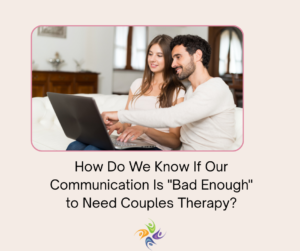
 If you’re Googling whether your communication problems are “bad enough” for therapy, here’s the honest answer: you’re probably ready.
Most couples wait too long. They tell themselves it’s not that serious, that all couples fight, that they should be able to figure it out on their own. By the time they finally reach out, resentment has built up for years—and the work is that much harder.
At The Relationship Therapy Center, we’ve seen this pattern hundreds of times across our Roseville and Fair Oaks offices. Couples therapy and marriage counseling work best when you start before things get desperate.
Is It Normal to Fight This Much in a Marriage?
 Some conflict is normal—even healthy. Every couple disagrees. The question isn’t whether you fight, but how you fight and whether you can repair afterward. If arguments repeat, escalate quickly, lead to shutdown, or leave lingering resentment, the issue isn’t the conflict—it’s the pattern and the lack of repair.
Let’s normalize something right away: conflict is part of marriage. Two people with different histories, stress levels, personalities, and preferences will disagree. That’s not a sign of failure—that’s a sign you’re human.
The better question is: Is your conflict productive or destructive? Does it lead to understanding and repair—or does it leave emotional damage that stacks up over time?
Normal conflict often looks like:
- disagreements about decisions, preferences, logistics
- occasional frustration or raised voices
- being able to cool down and reconnect relatively quickly
- feeling like you’re on the same team, even when you disagree
Signs it’s becoming a problem:
- the same argument over and over with no resolution
- conversations escalate quickly—small issues become big blowups
- one or both of you shut down, walk away, or go cold
- you avoid bringing things up because “it’s not worth the fight”
- you’re keeping score of past hurts
- repair attempts don’t work anymore (or aren’t happening)
The Gottman research angle:
Gottman’s research suggests that happy couples tend to maintain a 5:1 ratio—five positive interactions for every negative one, even during conflict. That doesn’t mean they never argue. It means the relationship has enough goodwill, warmth, and repair to buffer hard moments.
And one of the strongest predictors of relationship success is the ability to make and accept repair attempts—those small moments that say, “We’re going off this cliff. Let’s reset.”
Reframe: “Normal” isn’t the right question. The better question is: Is this working for us? Are we growing closer or further apart?
If you are curious about what common problems bring other couples to therapy you might want to read this blog
What Are the Signs We Actually Need Marriage Counseling?
 You don’t have to be on the brink of divorce to benefit from couples therapy. In fact, couples who come in earlier often get better results because resentment hasn’t hardened yet. If you’re stuck in repeating fights, emotional distance, pursue-withdraw patterns, or avoidance, therapy can help you shift the cycle before it becomes your “new normal.”
Many couples imagine therapy as something you do once the marriage is almost over. But in reality, the couples who benefit most are often the ones who come in before things are that bad.
You might be ready if:
- you keep having the same fight without resolution
- one of you pursues while the other withdraws (and it exhausts both of you)
- small disagreements escalate into major conflicts
- you feel more like roommates than partners
- there’s an issue you’ve been avoiding because you don’t know how to bring it up
- you’ve tried to fix things on your own, but nothing sticks
- you’re Googling “do we need couples therapy” at midnight (yes, really)
You don’t have to wait for:
- an affair or major betrayal
- threats of divorce
- constant screaming matches
- complete communication breakdown
- “rock bottom”
Nancy’s perspective (from experience):
Patterns can become deeply ingrained. The couples who come in earlier, to a very well-trained couples therapist—before resentment builds up—have a much smoother path.”
And here’s the simplest analogy: you don’t wait until your engine fails to get an oil change. Relationships benefit from preventive care too.
What Happens If We Wait Too Long to Start Couples Therapy?
 Waiting rarely improves communication problems—it usually makes them more entrenched. Resentment compounds, negative patterns become automatic, emotional distance grows, and one partner may check out long before therapy begins. The good news is it’s rarely “too late” if both partners are willing, but earlier intervention is almost always easier.
If waiting worked, you probably wouldn’t be reading this.
Here’s what tends to happen when couples delay getting help:
Resentment compounds
Every unresolved conflict adds another layer. Small hurts become big grievances when they’re never addressed. “This has been bothering me for a few months” is usually workable. “I’ve felt this way for years” is heavier—and it takes more time to unwind.
Negative patterns become automatic
The pursue-withdraw cycle becomes the default setting. Defensive reactions happen before you even think about them. You stop giving each other the benefit of the doubt because your nervous system is bracing for impact.
Emotional distance grows
You stop sharing your inner world. Bids for connection get ignored or rejected. Friendship erodes—and friendship is the foundation of a strong relationship.
One partner checks out
By the time some couples come in, one partner is already mentally done. “I love you, but I’m not in love with you” often comes after years of feeling unseen, unheard, or unsafe.
It’s still possible to come back from this—especially if both partners are willing. But catching it earlier is almost always easier, kinder, and faster.
How Do I Bring Up Couples Therapy With My Spouse?
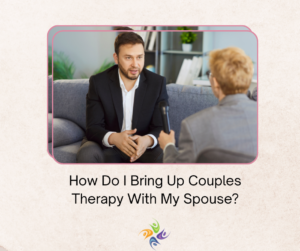 If you’re the one doing the research, approach therapy as an investment—not an indictment. Choose a calm moment, lead with “I” and “us,” and be clear about what you want (closeness, tools, relief from the cycle). If your partner hesitates, validate their concerns and suggest starting with one session or a free consultation.
If you’re reading this, there’s a good chance you’re the “research partner.” You’re trying to solve the problem before it becomes a crisis—while your spouse may be minimizing, overwhelmed, or skeptical.
Start by reframing what therapy means:
- It’s not admitting failure—it’s investing in your relationship
- It’s not about who is right and who is wrong
- Successful couples don’t have fewer problems; they have better tools
- Seeking help is a sign of strength, not weakness
 How to bring it up (so it doesn’t turn into another fight)
 How to bring it up (so it doesn’t turn into another fight)
- Lead with “I” and “us,” not “you”
✓ “I want us to be closer. I think we could use some help.”
✗ “You never listen to me. We need therapy.” - Frame it as a positive investment, not a last resort
- Choose a calm moment—not during or right after a fight
- Be honest about what you’re hoping for: “I want tools. I want us to stop hurting each other. I miss feeling like a team.”
If your partner is hesitant
- Acknowledge concerns without dismissing them
- Suggest starting with just one session to see how it feels
- RTC offers free consultations—low commitment, no pressure
- Some partners need time; give them space to consider it
For more on navigating different levels of motivation, see our post on what to do when one partner is more motivated than the other.
Start Couples Counseling in Fair Oaks or Roseville, CA
 “When someone can’t let go of a past hurt, there’s always a reason,” Nancy says. “Usually, something about the repair was incomplete. The apology didn’t land. The pain wasn’t truly heard. Once we address what was missing, couples are often surprised by how quickly things can shift.”
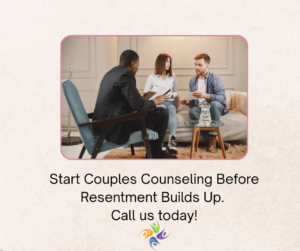
If you’re asking whether your communication is bad enough for therapy, that question itself is a sign you’re ready. You don’t have to wait for a crisis. The best time to start is before resentment builds up—while you still have the energy and goodwill to do the work together.
At The Relationship Therapy Center, we work with couples at every stage—from those who want a tune-up to those navigating major challenges. Our Gottman-trained therapists have helped hundreds of Sacramento-area couples learn to communicate without it turning into a fight. Learn more about the common problems we help couples work through.
To get started, follow these three steps:
- Contact our office to schedule a free consultation—we’ll answer your questions and help you figure out if we’re a good fit.
- Meet with a therapist who specializes in couples work and understands what you’re going through.
- Start building the skills you need to communicate, connect, and actually resolve conflicts.

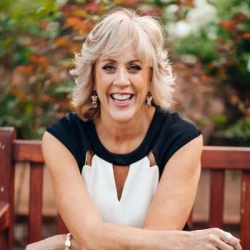
Certified Gottman Therapist
Nancy Ryan, LMFT & Certified Gottman Therapist, is the Founder and Clinical Director of Relationship Therapy Center, with 15+ years of experience supporting clients in Sacramento, Placer, and El Dorado Counties, and with offices in Roseville, CA, and Fair Oaks, CA. Our team also supports clients throughout California, Idaho, and Washington
She specializes in couples counseling, mentoring, and training her therapists on how to be excellent therapists. Nancy is also featured in a variety of media and provides couples therapy weekend workshops and retreats.
Relationship Therapy Center uses evidence-based approaches such as EMDR for trauma, Cognitive Behavioral Therapy (CBT), Acceptance and Commitment Therapy (ACT), Dialectical Behavior Therapy (DBT), Mindfulness, and Motivational Interviewing to treat individuals. Family therapy focuses on family systems and Play Therapy for children. Evidence-based couples therapy includes using the Gottman Method, Gottman Method Affair recovery/infidelity counseling, Emotionally Focused Therapy (EFT), Attachment therapy, and David Schnarch's Crucible Therapy, including differentiation. The whole team is in weekly training on trauma-informed care, somatic techniques, sex therapy, and different topics each year.
- Therapist for Childhood Emotional Neglect - October 8, 2026
- How do I Know if I Have Postpartum Depression? - October 1, 2026
- Is It a Midlife Crisis? - September 24, 2026