
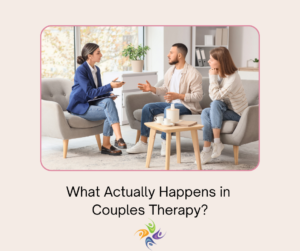
 You’ve been trying. You really have. You’ve read the articles about “active listening.” You’ve attempted calm-voice conversations after the kids go to bed. Maybe you even bought a relationship book or two—and one of you actually read it.
But here you are. Still stuck. Still having some version of the same frustrating conversation. Still lying in bed, wondering if your partner even gets you anymore.
And yet the idea of sitting on a couch with a stranger and talking about your relationship? That feels… intimidating. Maybe even a little embarrassing. Shouldn’t two smart, capable adults be able to work this out on their own?
Here’s what we tell couples who come to us at The Relationship Therapy Center in Fair Oaks and Roseville: the fact that you’ve been trying so hard is actually a great sign. It means you care. It means the motivation is there. What’s usually missing isn’t effort—it’s the right tools and a trained guide who can see patterns you can’t see from inside the relationship.
If you’ve been wondering what couples therapy and marriage counseling actually look like—what you’d walk into, what you’d be asked to do, and whether it’s really worth the time—this post is for you. Let’s pull back the curtain.
How Does Marriage Counseling Start?
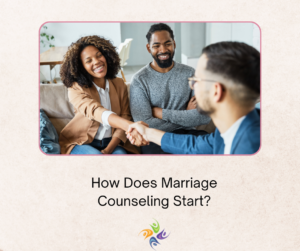 Couples therapy usually begins with an initial joint session to understand what’s bringing you in, followed by a structured assessment. At The Relationship Therapy Center, about 90% of couples complete the Gottman Assessment—research-backed questionnaires that give your therapist a clear picture of your strengths and stress points, so you’re not guessing where to start.
Most couples expect the first session to be a dramatic “tell us everything” experience. In reality, the start is usually more grounded than that—more like an orientation than an emotional interrogation.
The consultation/intake process
In the initial session, you’ll share what brought you in. Your therapist listens to both perspectives and begins to notice the dynamics: where conversations get stuck, what patterns emerge, and what each of you is hoping will change.
This is not a session where you’re expected to bare your soul immediately. You can move at a pace that feels manageable. Your therapist’s job early on is to create safety and structure—especially if you’ve been feeling tense, disconnected, or unsure whether therapy will “take sides.”
The Gottman Assessment (RTC’s big differentiator)
At RTC, we strongly encourage the Gottman Clinical Assessment. It’s a research-backed set of questionnaires that measures:
- friendship and connection
- conflict patterns
- shared meaning (the “why” behind your relationship)
- Trust levels and intimacy status
- Specific areas like finances, parenting, etc., that are problematic
- And other individual areas of concern
This matters because we don’t guess—we assess. Then we build a plan based on what your relationship actually needs.
The Oral History Interview
Your therapist may also ask you to tell the story of your relationship—how you met, what drew you together, key moments along the way. This is called the Oral History Interview, and research shows that how couples tell their story reveals a lot about the health of the relationship.
What the assessment phase accomplishes
By the end of this phase, your therapist has a roadmap—not just a hunch. They know where your relationship is strong, where it’s struggling, and which interventions match what’s happening.
And at RTC, we also work to match couples with the right therapist for their needs. Every couple’s therapist on our team is trained and supervised by a Certified Gottman Therapist—so you’re getting a whole practice built around couples work, not a one-off service.
How Is Couples Therapy Different from Individual Therapy for Each of Us?
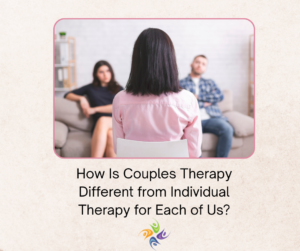 In couples therapy, the relationship is the client, not either individual. Your therapist isn’t there to diagnose one person or decide who’s right. They focus on the patterns between you: how you communicate, how you handle conflict, how you connect (or miss each other). That’s fundamentally different from individual therapy.
This might be the single most helpful thing to understand going in:
A skilled couples therapist isn’t looking for “the problem person.” They’re looking for the patterns.
The key reframe: the relationship is the client
Couples often arrive worried that therapy will be a courtroom:
- “Will the therapist prove I’m right?”
- “Will they gang up on me?”
- “Will this become two against one?”
In Gottman-informed couples work, the therapist isn’t a judge. The therapist is a guide. The focus stays on the system you two have created together—especially the moments where good intentions turn into painful impact.
What this looks like practically
In session, your therapist observes how you interact in real time. They’ll notice things you can’t easily see from inside the relationship, like:
- who pursues and who withdraws
- when defensiveness kicks in
- when bids for connection get missed
- what happens right before a conversation escalates
- how repair attempts land (or don’t)
These micro-patterns are usually where the real “stuckness” lives.
Why “individual therapy x 2” doesn’t work for relationship issues
Some therapists unintentionally treat couples therapy like two individual sessions in the same room—talking to one partner, then the other, without addressing the dynamic itself. That can leave couples feeling like they “talked a lot,” but nothing changed.
Gottman Method of couples therapy targets the interaction patterns, and it teaches specific skills that change them. In fact, you two will learn to dialogue with each other, with the therapist being a gentle coach to help you stay on track.
The therapist as a neutral guide
A skilled couples therapist is trained to hold space for both perspectives without aligning with either. You should feel like the therapist understands each of you—even when you disagree about what happened.
How individual therapy can complement couples therapy
Sometimes individual therapy helps alongside couples work—especially for trauma, anxiety, depression, or emotional regulation. RTC offers individual therapy and trauma work (including EMDR and Brainspotting) under one roof, which can be a natural complement when those issues are affecting the relationship.
What If We Start Fighting in a Couples Therapy Session?
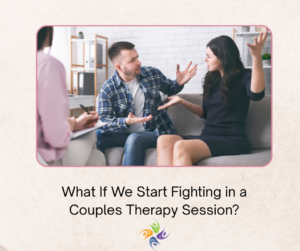 It happens—and it’s actually useful. When conflict shows up in session, your therapist can see your patterns in real time and coach you through them. They can pause the interaction, slow it down, identify what’s happening (like the Four Horsemen or flooding), and teach repair skills you can’t learn mid-fight at home.
Let’s normalize this immediately: fighting in session doesn’t mean therapy isn’t working. It often means therapy is finally catching the real cycle in action.
At home, conflict tends to escalate because no one is there to slow it down. In session, your therapist can hit pause and coach you through the moment.
How a Gottman-trained therapist handles in-session conflict
A Gottman-trained therapist can identify the Four Horsemen in real time:
- criticism
- contempt
- defensiveness
- stonewalling
And they don’t just label them—they teach the antidotes in the moment. This is where having a therapist with access to 50+ research-based interventions (not just “try I-statements”) makes a huge difference.
The concept of flooding
When one partner gets emotionally overwhelmed, their nervous system shifts into fight-or-flight. One person may get louder; the other may shut down completely.
Your therapist teaches both of you how to:
- recognize flooding in your body
- take a good break (not storming off)
- and—critically—come back with a repair attempt
Why this is different from fighting at home
At home, you’re trying to solve the conflict while you’re both activated. In session, you’re learning how to manage the activation itself—so conflict becomes navigable instead of dangerous.
You’re essentially getting real-time coaching on conflict. That’s not embarrassing. That’s efficient.
Does Couples Therapy Have Homework?
 Often, yes—but it’s not “homework” in the school sense. Most therapists assign small, practical exercises to practice between sessions—like daily check-ins, conversation prompts, or new ways to handle recurring arguments. Between-session practice is where skills become habits, and it’s often where couples start to feel real change fastest.
If therapy only worked in the therapy room, it wouldn’t be very useful. Real relationships happen on weeknights, during stressful mornings, and in that five-minute window between pickup and dinner.
So yes—often there’s “homework.” But it’s usually practical and doable, not time-consuming and academic.
What “homework” can look like (Gottman examples)
- Love Maps questions: learning your partner’s inner world
- Softened / gentle startup practice: bringing up concerns without blame
- Daily stress-reducing conversation: listening to outside stress without fixing
- Gottman Card Decks app: 22 decks, 1,000+ prompts (free resource)
- Rituals of connection: a morning goodbye ritual, daily check-in, weekly date time
Why between-session practice matters
Therapy gives you tools. Practice is what makes them stick.
Couples who do the between-session work tend to see faster progress—not because they’re “better,” but because they’re building new habits where it counts.
The accountability factor
Knowing your therapist will ask how it went creates gentle accountability. You’re more likely to try something new when you know it won’t disappear into the chaos of life.
It’s not about perfection
Even “failed” attempts are useful data. Therapy isn’t about doing the homework perfectly—it’s about noticing what happens when you try, and adjusting from there.
Example homework exercises (quick list):
- Love Maps questions
- gentle startup practice
- daily stress-reducing conversation
- Gottman Card Decks app prompts
How Long Does Couples Therapy Usually Take?
 There’s no single timeline. Some couples feel shifts within a few weeks; others—especially those navigating infidelity, deep resentment, or years of disconnection—need several months. A good therapist checks in on progress and adjusts the plan as you go. At RTC, the goal is skill-building and independence, not staying in therapy forever.
This is the question every busy couple asks—often within the first 10 minutes.
And the honest answer is: it depends.
Factors that affect timeline
- how long you’ve been struggling
- how entrenched patterns are
- the issue you’re addressing (communication vs. affair recovery vs. life transitions)
- whether both partners engage consistently
- how much practice happens between sessions
A typical arc at RTC
Many couples move through phases:
- Assessment phase (first few sessions)
- Active skill-building (several weeks to months)
- Maintenance (less frequent “check-ins” once skills stick)
The goal isn’t to keep you in therapy indefinitely.
Nancy’s philosophy on this is simple: teach skills, then let go.
“Our goal is that you learn the tools you need and then just come in when you need it.”
Weekend intensives as an option
For Sacramento-area professionals who can’t commit to weekly sessions, RTC offers weekend intensives—a way to compress months of progress into focused time.
The “check-in” model
Some couples finish active therapy and then come back periodically for a tune-up—like going to the dentist for your relationship. That’s healthy, not a failure.
If you want to understand more about approaches and formats, you can also read our post on What Type of Therapy Is Best for Couples?
What Does Progress Look Like in Marriage Counseling?
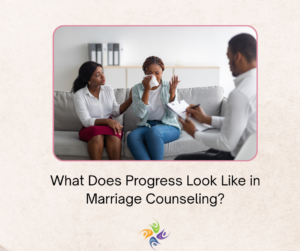 Progress usually isn’t one dramatic breakthrough—it’s gradual, and it shows up in small moments first. You might recover from arguments faster, feel safer bringing things up, or notice more warmth and curiosity returning. The shift from “stuck” to “moving” can be quiet, but it’s real—and it builds over time.
Couples often expect progress to look like a movie scene: one tearful confession, one perfect apology, and suddenly everything changes.
In real life, progress looks more like this: you catch yourselves sooner. You repair faster. You feel less hopeless.
Signs things are shifting
- arguments de-escalate faster—you catch yourselves sooner
- repair attempts start working (one reaches out, the other accepts it)
- you turn toward each other more often and respond to bids
- the old fight feels less intense or resolves more quickly
- you understand why your partner reacts the way they do (even if you disagree)
- you feel heard—not necessarily agreed with, but genuinely heard
- you’re using tools outside of session
What progress is NOT
Progress does not mean you never fight. Gottman’s research suggests 69% of relationship conflicts are perpetual—they never fully resolve because they’re rooted in personality or lifestyle differences.
The goal isn’t eliminating disagreement. It’s learning to talk about differences without damaging the relationship.
The success that isn’t staying together
Not every couple decides to stay married—and that’s okay. Sometimes the success of couples therapy is a couple making a thoughtful, respectful decision about their future rather than a reactive, painful one.
RTC success language is simple: we love getting emails months later from couples saying they handled a conflict on their own using the tools they learned. That’s the goal—skills that last.
If you want a deeper look at what couples bring to therapy, you can also read What Are the Most Common Problems Addressed in Marriage Counseling or Couples Therapy?
What Not to Do During Couples Therapy?
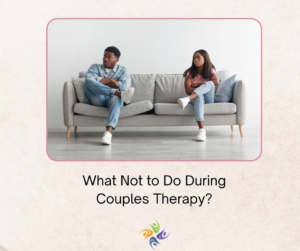 The biggest therapy-killer is treating sessions like a courtroom—trying to prove your partner wrong or recruit the therapist to your side. Your therapist isn’t a judge; they’re a guide. Therapy works best when both partners show up with honesty, willingness to learn, and respect for what’s shared in session—without weaponizing it later.
If you want couples therapy to work, here’s what not to do:
- Don’t recruit the therapist to your team. The therapist is there for the relationship, not to declare a winner.
- Don’t hold back to look good. Therapy works best when you’re honest about what’s really happening.
- Don’t expect your partner to do all the changing. Relationships are systems. When one person shifts, the whole dynamic shifts.
- Don’t skip sessions—or the between-session practice. Consistency matters more than intensity.
- Don’t use what comes up in session as ammunition later. Vulnerability should stay protected. Weaponizing it breaks trust fast.
- Don’t quit after one hard session. Discomfort isn’t always a bad sign. Often, it means you’re finally getting to the real pattern.
What NOT to do (quick list):
- treat it like a courtroom
- hide the truth to look good
- expect the therapist to “fix” your partner
- skip practice and expect results
- weaponize vulnerability later
- quit after one hard session
Begin Couples Therapy or Marriage Counseling in the Sacramento Area
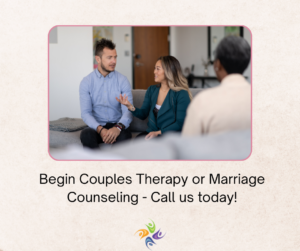 If you’ve been reading this and thinking, “Okay, maybe it’s time”—trust that instinct.
At The Relationship Therapy Center, we work with couples at every stage—whether you’re navigating a rough patch, rebuilding after something painful, or simply ready to stop having the same frustrating conversation on repeat. With offices in Roseville and Fair Oaks and telehealth available throughout California, we make it easy to get started.
Our team is led by the only Certified Gottman Method Therapist in the Sacramento area. Every couple’s therapist on staff is personally trained and mentored—with video session review, ongoing consultation, and access to over 50 research-based interventions. When you work with us, you’re getting a team behind your relationship, not just one therapist who attended a weekend workshop.
Getting started is simple:
- Reach out — Call, text, or fill out our contact form
- Schedule a consultation — We’ll match you with the right therapist for your situation
- Begin building the relationship you want — With real tools, real support, and a clear plan
Certified Gottman Therapist
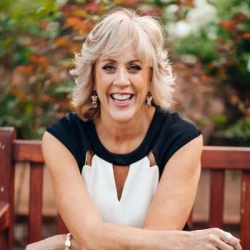
Nancy Ryan, LMFT & Certified Gottman Therapist, is the Founder and Clinical Director of Relationship Therapy Center, with 15+ years of experience supporting clients in Sacramento, Placer, and El Dorado Counties, and with offices in Roseville, CA, and Fair Oaks, CA. Our team also supports clients throughout California, Idaho, and Washington
She specializes in couples counseling, mentoring, and training her therapists on how to be excellent therapists. Nancy is also featured in a variety of media and provides couples therapy weekend workshops and retreats.
Relationship Therapy Center uses evidence-based approaches such as EMDR for trauma, Cognitive Behavioral Therapy (CBT), Acceptance and Commitment Therapy (ACT), Dialectical Behavior Therapy (DBT), Mindfulness, and Motivational Interviewing to treat individuals. Family therapy focuses on family systems and Play Therapy for children. Evidence-based couples therapy includes using the Gottman Method, Gottman Method Affair recovery/infidelity counseling, Emotionally Focused Therapy (EFT), Attachment therapy, and David Schnarch's Crucible Therapy, including differentiation. The whole team is in weekly training on trauma-informed care, somatic techniques, sex therapy, and different topics each year.
- Is It a Midlife Crisis? - September 24, 2026
- Therapy for Toxic Relationships - September 17, 2026
- The Survival Guide for ADHD Couples - September 10, 2026