
 You’ve been thinking about couples therapy for weeks—maybe months. You’ve read articles, looked up therapists, even imagined what it might feel like to finally have someone help you two get unstuck. But your partner? They’re not there yet. Maybe they’ve said, “We don’t need that,” or they go quiet every time you bring it up.
If you’re reading this from your car in a Roseville parking lot or scrolling on your phone after another tense evening, you’re not alone. This is one of the most common concerns we hear at The Relationship Therapy Center—and it doesn’t have to be a dealbreaker. When one partner is more ready, it doesn’t mean the relationship is doomed. It usually means you’re the one who’s noticing the distance first—and trying to do something brave about it.
How Do I Talk to My Partner About Going to Couples Therapy?
The best way to bring up couples therapy is as an invitation—not an ultimatum. Timing matters: choose a calm moment, not the middle of a fight. Lead with what you want and what you miss, not what your partner is doing wrong. When you start with “I” and “us,” you create safety instead of defensiveness.
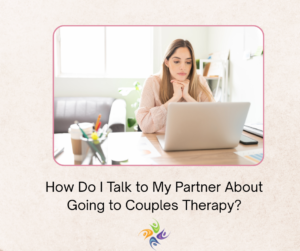 If you’ve tried to bring up therapy during or right after an argument, you already know how that ends: one of you escalates, the other shuts down, and therapy becomes the latest item in the “things we can’t talk about” pile.
Instead, treat this like an invitation you want your partner to actually receive.
Pick a neutral moment.
Saturday morning coffee. A quiet drive. A walk after dinner. A time when neither of you is flooded, defensive, or bracing for impact.
Lead with “I” and “us”—not “you.”
Here are examples that tend to land better:
Yes
- “I’ve been feeling disconnected, and I miss how close we used to be. I’d love for us to talk to someone together.”
- “I want to invest in us. I found a couples therapist who uses a research-based approach—would you be open to trying one session?”
Avoid
- “You never want to talk about our problems.”
- “If you won’t go to therapy, I don’t know what else to do.”
Normalize it.
This isn’t about being broken—it’s about being intentional. Many couples we work with aren’t in crisis. They’re Sacramento-area professionals who invest in their health, their careers, and their families. Therapy is simply investing in the relationship, too.
Name what you think therapy is—and what it isn’t.
A lot of resistance comes from scary assumptions. It can help to say this out loud:
- It’s not someone telling you what’s wrong with your relationship
- It’s not taking sides
- A good couples therapist treats the relationship as the client, not one person vs. the other
If the concern is practical (time/money/logistics), address it with specifics.
Sometimes “I don’t want therapy” is really “I don’t know what this will cost us—time, money, emotional energy.”
You can mention:
- Sessions don’t have to be weekly forever—many couples start weekly and move to maintenance check-ins
- Weekend intensive options can accomplish months of progress in a concentrated format (great for demanding careers)
- Online therapy is available across California, and both partners don’t even have to be in the same location (helpful for partners who travel for work)
- The first appointment is usually less scary than they imagine—more on that below
And yes—what you’re practicing here is actually a Gottman skill: a Gentle Startup. Bringing up something hard without blame or criticism is one of the first things couples learn in therapy. You can start now.
Why Does My Spouse Not Want to Go to Couples Therapy?
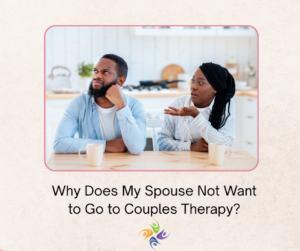 Most reluctance isn’t really about the relationship—it’s about what your partner imagines therapy will be. Many people fear being blamed, being ganged up on, or sitting through endless feelings-talk with no outcome. When you understand what’s underneath the hesitation, you can respond with empathy and clarity instead of pushing harder.
When you’re the motivated partner, it’s easy to interpret your spouse’s hesitation as, “They don’t care.” Often, it’s closer to: “They’re scared, skeptical, or unsure what they’re walking into.”
Here are the most common reasons partners resist—and what’s usually underneath:
“We should be able to figure this out ourselves.”
Underneath: pride, self-reliance, or a belief that needing help means failure.
Your response: “I actually think it’s a sign of strength. We go to the doctor when something’s off physically—this is the same thing for our relationship.”
“Therapy doesn’t work,” or “We tried it before and nothing changed.”
Underneath: a previous bad experience—or stories from friends/family about unhelpful therapy.
Your response: “Not all couples therapy is the same. The practice I found uses a research-based approach with a structured assessment—so it’s not just talking in circles.”
A concrete number that may help: Research often cited in the field suggests couples counseling helps around 70% of couples improve when they’re working with a therapist specifically trained in couples therapy (not just an individual therapist who “also sees couples”).
As Nancy Ryan, LMFT, puts it: “Many couples come to us saying that they need tools to help. Learning ‘I statements’ is helpful, but they need more than that.” That’s exactly why the Gottman Method focuses on 52+ specific interventions rather than generic talk therapy.
If this resonates, you might also share our guide on “what type of therapy is best for couples”—it explains what separates effective therapy from everything else.
“I don’t want someone telling me what’s wrong with me.”
Underneath: fear of being ganged up on—two-against-one.
Your response: “A good couples therapist doesn’t take sides. They help us understand the patterns we’re stuck in—not point fingers.”
“I’m fine. You’re the one who wants to change things.”
Underneath: they may genuinely not see the problem—or they may be avoiding it because acknowledging it feels overwhelming.
Your response: “I hear you. But I’m not fine, and the relationship matters to me. I’m asking because I want us to be better—not because I think you’re the problem.”
And here’s a permission slip you probably need: you don’t have to convince your partner with a PowerPoint deck (even if you could make a beautiful one). Sometimes the most powerful thing you can say is simply:
“I’m hurting. I miss you. This matters enough to me that I looked into it. Will you try one session?”
You can’t force someone into therapy—but you can create a safe opening. And often, the reluctant partner becomes the most engaged client once they experience that therapy is practical, structured, and that no one is being blamed.
Can Couples Therapy Work If Only One Partner Is Fully on Board?
 Yes—more often than you’d expect. Couples therapy can create meaningful change even when one partner starts out skeptical, as long as they’re willing to show up. “Willing” doesn’t mean enthusiastic—it means present and reasonably open. Many reluctant partners relax quickly once therapy feels structured, fair, and focused on real tools.
Is It Normal for One Partner to Be More Ready Than the Other?
Equal motivation at the start is rare. One partner is almost always further along in readiness—and a skilled couples therapist expects that. You’re not doing something wrong by being “the one who wants this more.” What matters most isn’t equal excitement. It’s willingness to try: one session, then decide based on experience, not fear.
Most couples we work with at The Relationship Therapy Center say the first session felt different from what they expected—more practical, less scary, and less about blame than they’d feared.
How Does a Gottman Therapist Engage a Reluctant Partner in Couples Counseling?
A reluctant partner usually needs three things immediately: safety, structure, and proof that this won’t be a blame-fest.
This is where a Gottman-trained therapist can be especially effective:
- Creates safety from session one. Both partners feel heard before the “work” begins.
- Uses assessment and structure early. The Gottman assessment is often completed online before your first session—so by the time you walk in, your therapist already has a detailed map of strengths and challenges. That means the reluctant partner doesn’t sit through a vague “so… tell me about your feelings” opener. They get structure, data, and a plan.
- Makes it concrete. Many partners who resist “talking about feelings” become surprisingly engaged when they see clear patterns and measurable goals.
- Doesn’t take sides. Managing the dynamics between two people is a specialized skill set—not every therapist has it, even if they’re excellent with individuals.
- Stays practical and skills-based. “Here’s what’s happening. Here’s what to do about it. Let’s practice right now.” For many reluctant partners, this is the turning point.
What If My Partner Truly Won’t Go to Therapy?
If your partner truly won’t go, you can still make meaningful shifts on your own. Relationship therapy for one is a real thing—it helps you understand your patterns, build healthier communication habits, and change how you show up in the relationship.
And sometimes, when one partner changes how they engage—less criticism, more clarity, better boundaries, calmer repair—the dynamic shifts enough that the other partner becomes curious.
This isn’t about “fixing yourself so they’ll come around.” It’s about not staying stuck while you wait for perfect conditions.
You can learn more here: relationship therapy for one
Bottom line: don’t wait for perfect readiness from both sides. That rarely happens. The couples who do best are the ones who start before everything is ideal.
At our practice, couples therapy and marriage counseling make up half of what we do. We’ve worked with hundreds of couples where one partner walked in skeptical—and walked out asking when the next session was.
Take the First Step Toward Couples Therapy in the Sacramento Area
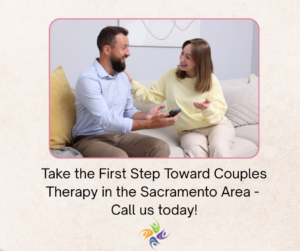 You don’t need your partner to be as ready as you are—you just need them to be willing to try. If you’ve been carrying the weight of wanting change, that matters. RTC therapists are trained to engage both partners from day one with structure and fairness. With offices in Roseville and Fair Oaks, plus telehealth services across California, getting started is easier than you think.
If you’ve been carrying the weight of wanting things to change—researching therapists, reading articles like this one, wondering how to bring it up—that matters. The fact that you’re here says something important about what this relationship means to you.
At The Relationship Therapy Center, our therapists are trained to meet both partners exactly where they are. With offices near Highway 65 in Roseville and off Sunrise Boulevard in Fair Oaks—plus telehealth across California—taking the first step is easier than you think.
Reach out today to schedule a consultation. We’ll answer your questions, talk through your concerns, and help you figure out the right next step—whether your partner is ready or not.
The therapists at The Relationship Therapy Center specialize in helping couples navigate exactly this kind of impasse—when one partner is ready, and the other isn’t sure yet. Every couple’s therapist on the team is trained in the Gottman Method under the direct mentorship of Nancy Ryan, M.A., LMFT, the only Certified Gottman Therapist in the Sacramento area. That training includes learning how to engage both partners from the very first session—building safety, earning trust, and creating a space where even the most skeptical spouse can start to feel heard. The Relationship Therapy Center serves couples throughout Roseville, Fair Oaks, and the greater Sacramento metro, with telehealth available across California.
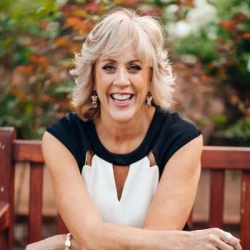
Certified Gottman Therapist
Nancy Ryan, LMFT & Certified Gottman Therapist, is the Founder and Clinical Director of Relationship Therapy Center, with 15+ years of experience supporting clients in Sacramento, Placer, and El Dorado Counties, and with offices in Roseville, CA, and Fair Oaks, CA. Our team also supports clients throughout California, Idaho, and Washington
She specializes in couples counseling, mentoring, and training her therapists on how to be excellent therapists. Nancy is also featured in a variety of media and provides couples therapy weekend workshops and retreats.
Relationship Therapy Center uses evidence-based approaches such as EMDR for trauma, Cognitive Behavioral Therapy (CBT), Acceptance and Commitment Therapy (ACT), Dialectical Behavior Therapy (DBT), Mindfulness, and Motivational Interviewing to treat individuals. Family therapy focuses on family systems and Play Therapy for children. Evidence-based couples therapy includes using the Gottman Method, Gottman Method Affair recovery/infidelity counseling, Emotionally Focused Therapy (EFT), Attachment therapy, and David Schnarch's Crucible Therapy, including differentiation. The whole team is in weekly training on trauma-informed care, somatic techniques, sex therapy, and different topics each year.
- Therapist for Childhood Emotional Neglect - October 8, 2026
- How do I Know if I Have Postpartum Depression? - October 1, 2026
- Is It a Midlife Crisis? - September 24, 2026